The Centre Pieter Gillis is organizing this event in collaboration with UCSIA. It will be in Dutch.
Who was René Girard?
René Girard (1923–2015) was a French intellectual who spent most of his career working in the United States. He began his career as a historian and literary critic and went on to become one of the most influential cultural thinkers of the twentieth century.
His key concept is simple and surprising: we often want something simply because others want it. This ‘mimetic desire’ gives rise to rivalry, and groups often resolve the tension that results from it by collectively singling out a single victim: the scapegoat. Girard wanted to bring this mechanism to light, so that we might put an end to it.
Trump and the 'Girardians'
In 1995, he was awarded an honorary doctorate in Antwerp. Thirty years later, his name has popped up in an unexpected context: Donald Trump’s inner circle. Tech billionaire Peter Thiel and Vice President JD Vance describe themselves as ‘Girardians’. But are they really reading him the right way? The new American power brokers are constantly singling out new scapegoats, whilst Girard advocated precisely the opposite.
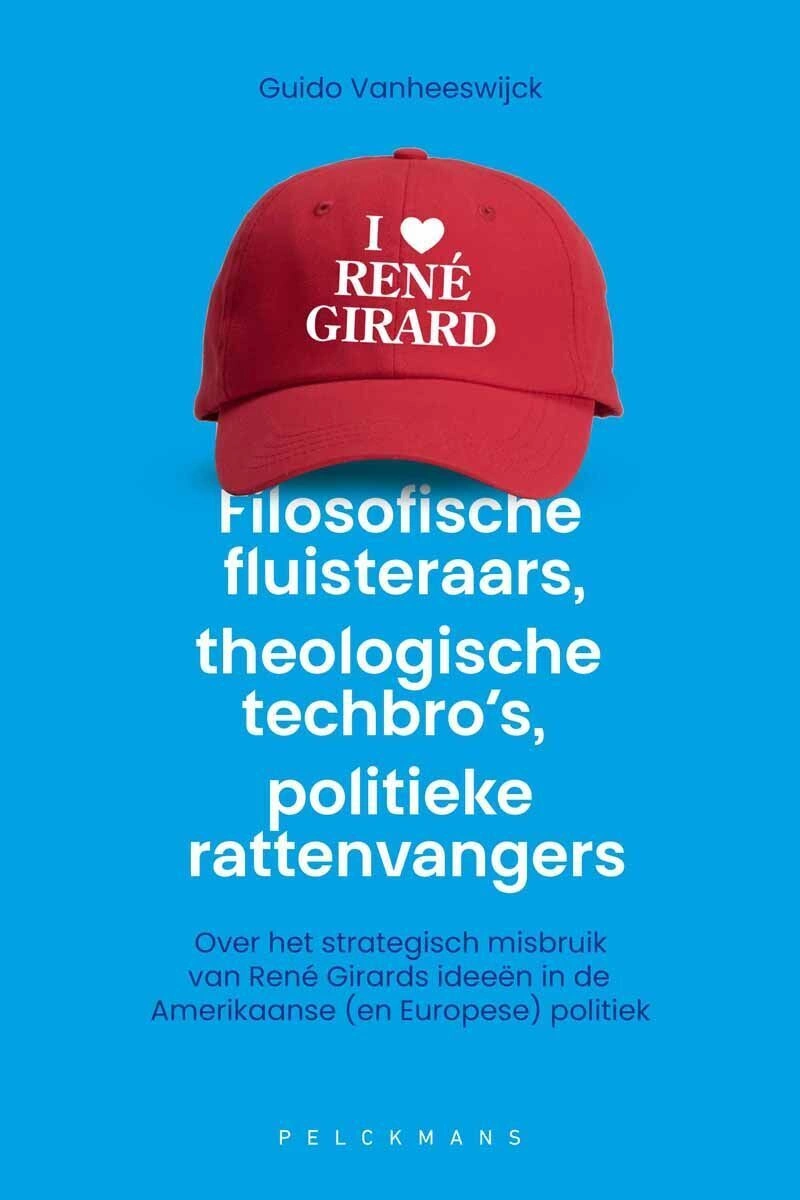
In his new book Filosofische fluisteraars, theologische techbro’s, politieke rattenvangers (Philosophical Whisperers, Theological Tech Bros, Political Pied Pipers), Guido Vanheeswijck analyzes how Girard’s thinking is being used and misused for a political-ideological project that runs completely against what Girard himself had in mind. Europe features in this discussion as well.
Join us for the book launch and talk with the author.
About Guido Vanheeswijck
Guido Vanheeswijck (1955) is a philosopher and professor emeritus at the University of Antwerp and KU Leuven. He has written numerous books and articles, including works on Robin Collingwood, René Girard and Charles Taylor. In 1995, he was the supervisor for Girard’s honorary doctorate in Antwerp.
About the Centre Pieter Gillis
The Pieter Gillis Centre embodies the University of Antwerp’s active pluralism in teaching, research and community engagement. It organises broadening elective modules, coordinates Community Service-Learning and promotes dialogue and social engagement, including through various public lectures and discussion evenings.
The name refers to the Antwerp humanist and friend of Erasmus and Thomas More, and, like him, the centre takes philosophical questions seriously and approaches them with an open mind.