From radio to AI: the Catholic Church in a technological age
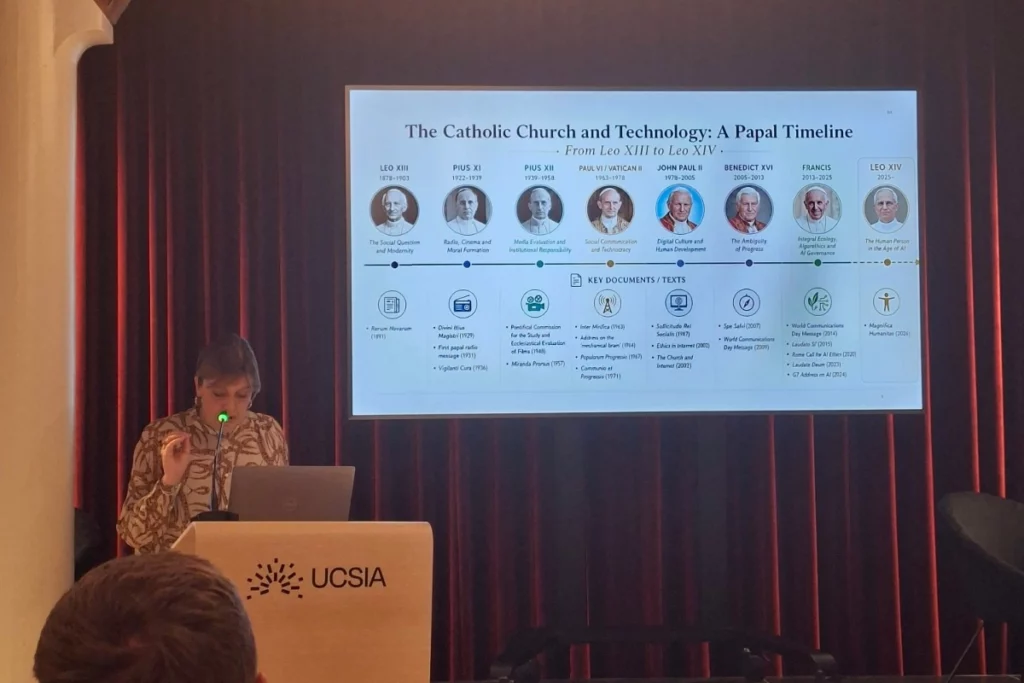
On 27 August 2026, Alessandra Vitullo (Sapienza University of Rome) gave a public lecture at the UCSIA Summer School on the way the Catholic Church has engaged with new communication technology for over a century.
From Pius XI’s first papal radio message in 1931, via the Vatican’s first website under John Paul II in 1995 and Benedict XVI’s Twitter account, to Pope Leo XIV’s brand-new encyclical Magnifica Humanitas on artificial intelligence: time and again, the Church has searched for a language to understand and guide new technology.
Book the podcast studio now at our special launch price!
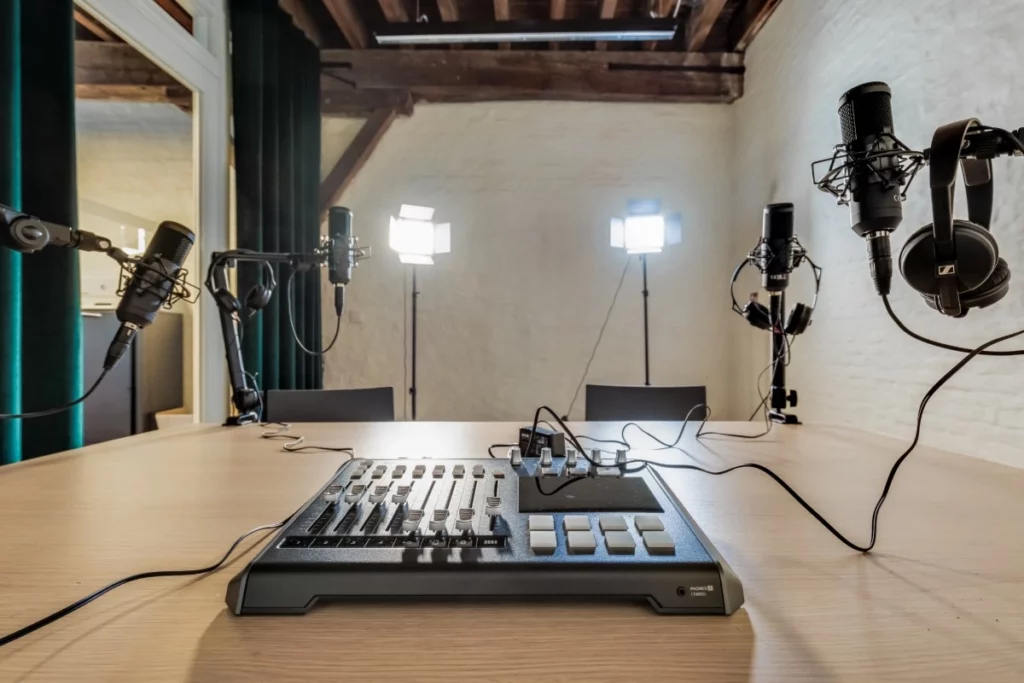
Our brand-new podcast studio is finally ready to welcome you! Are you looking for a professional venue to record a podcast or interview? You can now use our studio at the UCSIA House, Koningstraat 2 in Antwerp, directly opposite the University of Antwerp’s City Campus.
The studio is equipped with a TASCAM Mixcast 4 mixing console, four Tascam TM-70 dynamic microphones and four pairs of headphones, and can accommodate up to four speakers.
A short user guide will help you get started in just a few simple steps. The setup is highly intuitive, so no technician is required.
Living Within the Truth: Václav Havel, Pope Leo XIV, and the Building of Peace
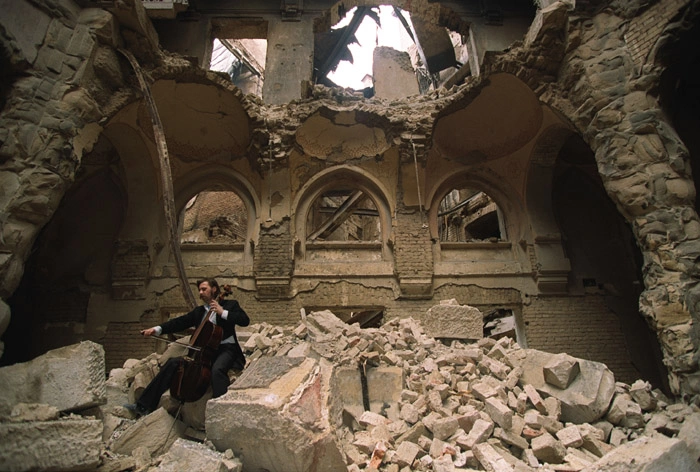
Peace is more than the absence of war. In this preparatory webinar for the FUCE Summer School, Michael Shortall explores what it takes to build it from the inside out.
The starting point is the image of a cellist playing Albinoni’s Adagio among the ruins of a bombed bakery. This gives rise to a reflection on peace, truth and what it means to be human together.
Two summer school alumni on religion, nationalism and populism

How does the Russian state use the Russian Orthodox Church to reinforce a nationalist worldview? And what do memes on Truth Social reveal about Donald Trump’s religious appeal? Two questions, two alumni, one webinar. UCSIA organized an online teaser of the upcoming UCSIA Summer School on religion, culture and society.
25 years of JRS: building bridges where no one else is going

JRS Belgium — Jesuit Refugee Service — is celebrating its 25th anniversary this year. As social initiative of the Jesuits in Belgium, the organization is part of the Ignatian family, just like UCSIA. JRS Belgium supports people living at the margins of our society: every week, staff members visit people in administrative detention centres for migrants, seek alternatives to detention and work to raise broader societal awareness through their advocacy programmes.
To mark this anniversary, we spoke with Jörg Gebhard, director of JRS Belgium, about the organization’s mission, its work on the ground and his views on the current migration debate.
Arendt, Camus and the art of not capitulating

How can Hannah Arendt and Albert Camus help us navigate times of polycrisis, remaining upright in both thought and action? This question was the focus of the study day Thinking as Revolt in Times of Crisis – Hannah Arendt and Albert Camus, which took place in December 2025 at the University of Antwerp.
The contributions have now been developed and published by Streven Vrijplaats, the online platform of the philosophical-cultural journal of the same name. Below you will find an overview of all the essays.
Activity Report 2025: a year of new beginnings

A new colleague, a new winter school, a new European project — the 2025 activity report shows that UCSIA was active on many fronts last year. We not only delivered a full programme, but also launched a range of new initiatives.
Wouter Schepers (HIVA) and Nele Vanderhulst (Socius) on loneliness, caring neighbourhoods and citizen initiatives

37% of people in Flanders report feeling lonely from time to time or often, and that is not simply a matter of individual circumstances. How can we address loneliness by strengthening our neighbourhoods? The COVID-19 pandemic appears to have given a boost to citizen initiatives. Is that really the case? And how can a crisis act as a catalyst for change?
Wouter Schepers and Nele Vanderhulst share their insights on what the pandemic has done to our social fabric.
Koert Debeuf (VUB) and Maarten Rabaey (De Morgen) on tribalization, the media and a world in flux
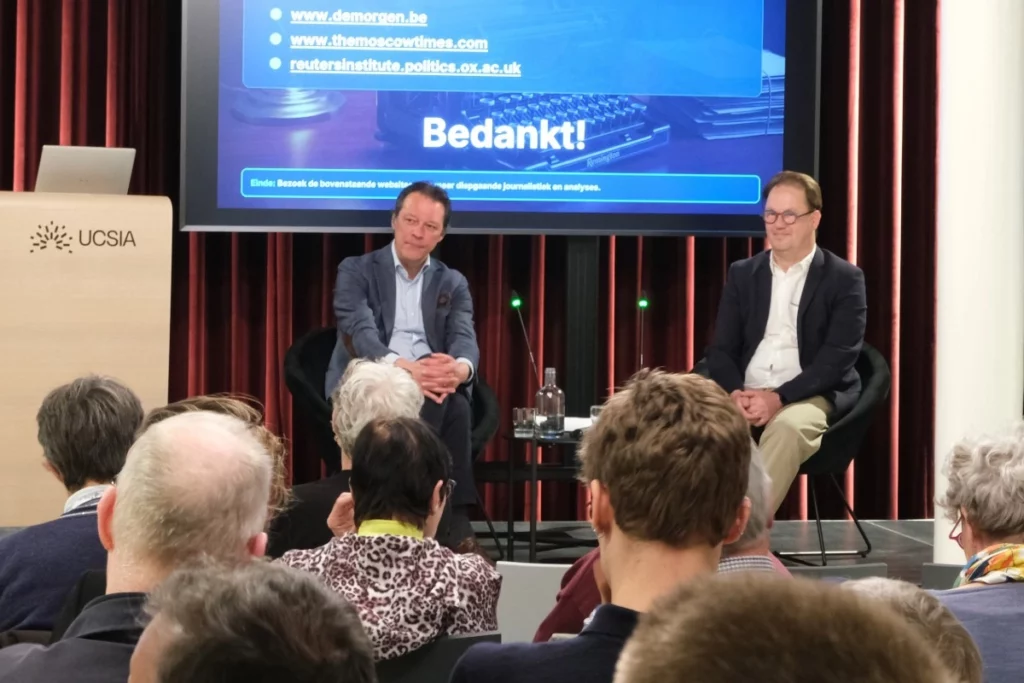
Has COVID fundamentally changed the world? Or did the pandemic merely accelerate developments that were already underway? In the fourth and final evening of U-turn: 5 years later, Koert Debeuf (VUB) and Maarten Rabaey (De Morgen) explored these questions in search of an answer.
Watch the full recording here.
Land that unites

Petra Tas (De Landgenoten) and Cléo Rosseneu (Ecokerk) advocate for the long-term integration of organic farming on church-owned agricultural land. Careful management and long-term contracts can act as a catalyst for a just transition: good for the soil, biodiversity and the next generation of farmers. UCSIA, together with De Landgenoten and Ecokerk, is organizing four meeting days for church landowners.
Scholarship Louis Bruyns 2026-27

UCSIA is offering the Louis Bruyns Scholarship for the 2026-2027 academic year, a grant for a PhD student from the Global South to spend a research period at the University of Antwerp. During the stay, the student will also contribute to a public event on a relevant theme, such as equitable transition or migration.
Extended deadline! Submit your proposal before 30 June 2026!
Maarten Degreef (Sciensano) and Anthony Longo (Tilburg University) on substance use and social media
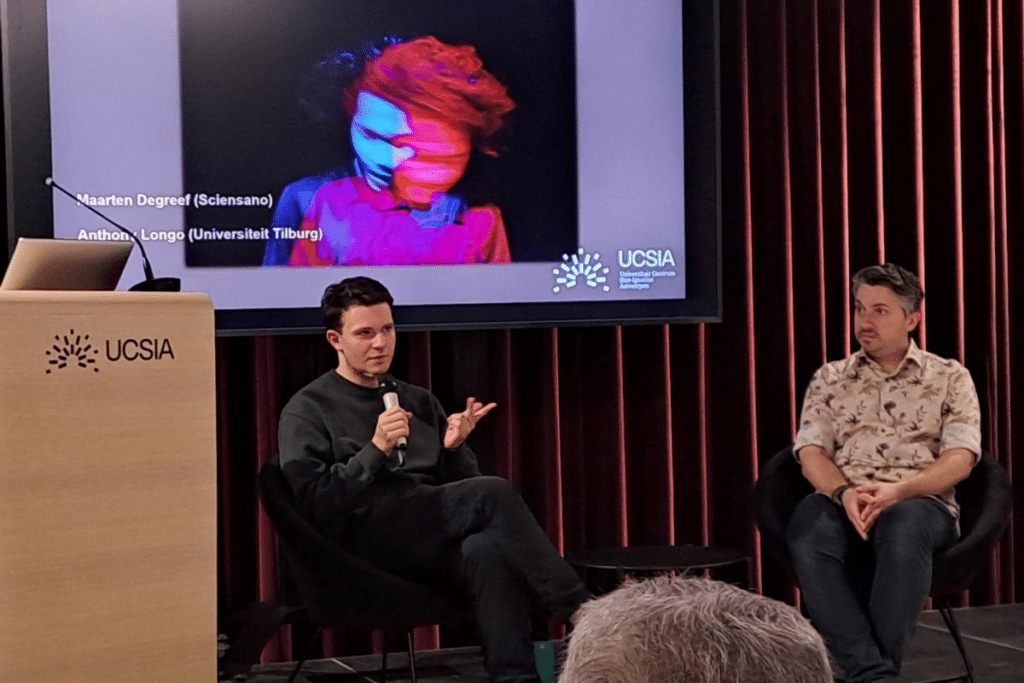
How did the COVID-19 crisis affect our use of substances and social media, and what lasting traces has it left? During the second evening of U-turn: 5 years later, Maarten Degreef (Sciensano) and Anthony Longo (Tilburg University) explored this issue in depth. Watch the full recording here.