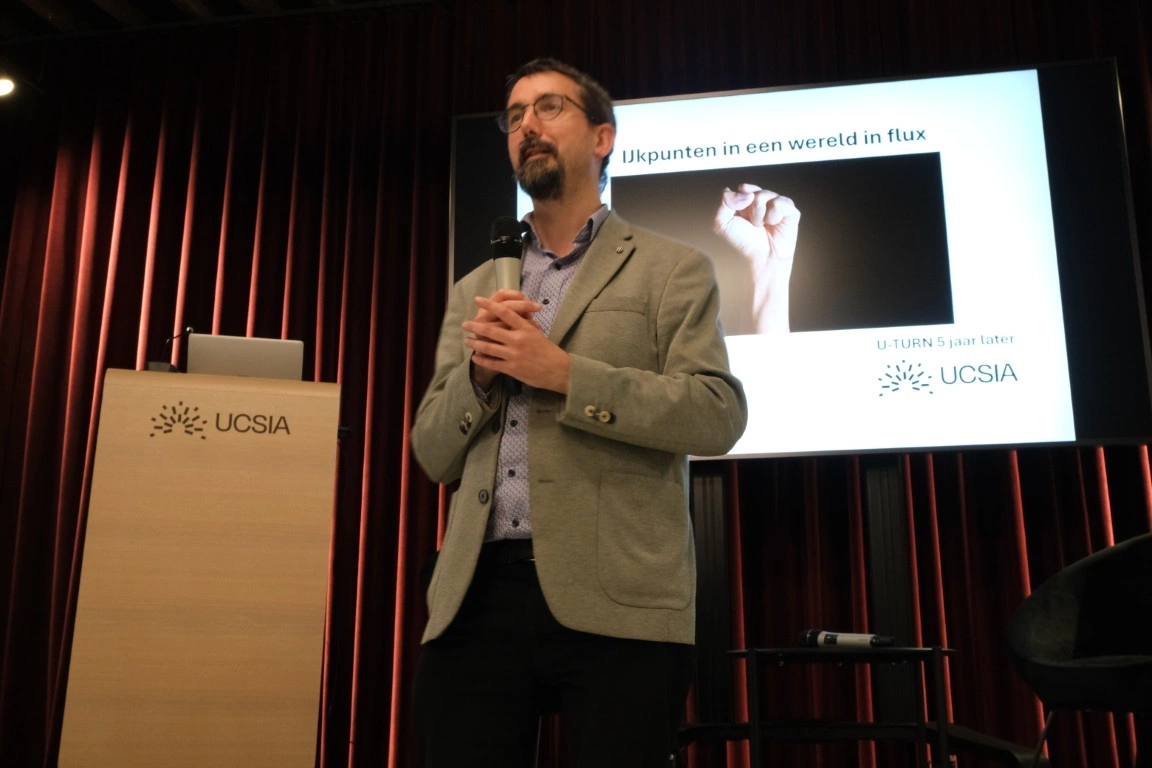
Reference Points for a World in Flux
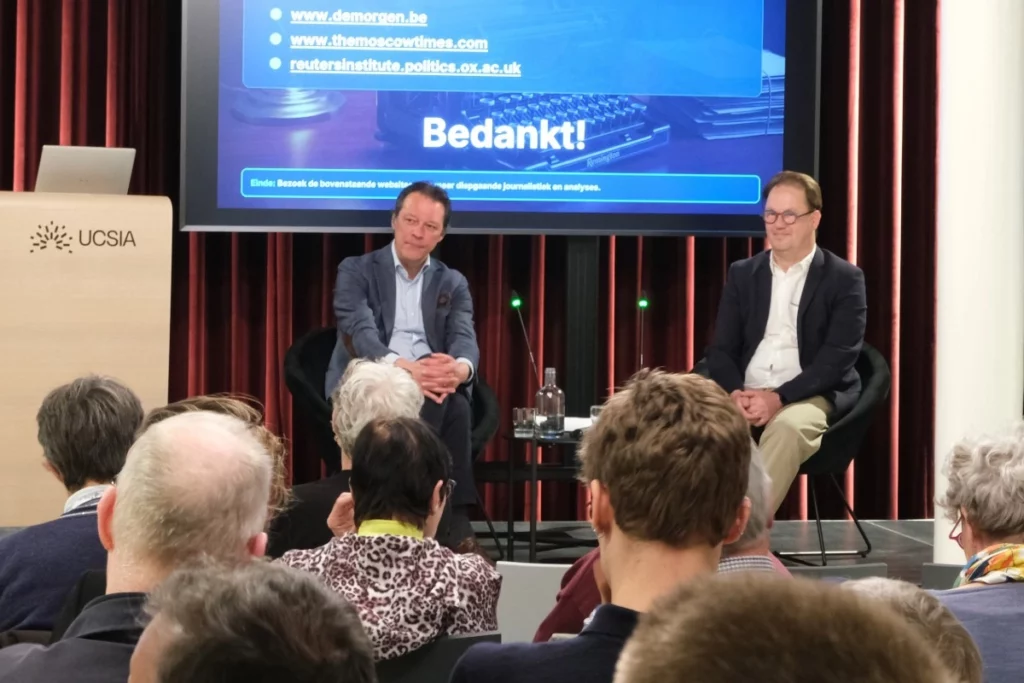
How has COVID changed global politics? And what can we do about it ourselves? Koert Debeuf (VUB) explains why the world has been moving towards tribalization since 2006, and how the pandemic has accelerated that trend. Maarten Rabaey highlights the other side of the story: how the press itself is under pressure, yet can still play a vital role in defusing tensions.
The world is becoming more tribal, and COVID has accelerated that trend
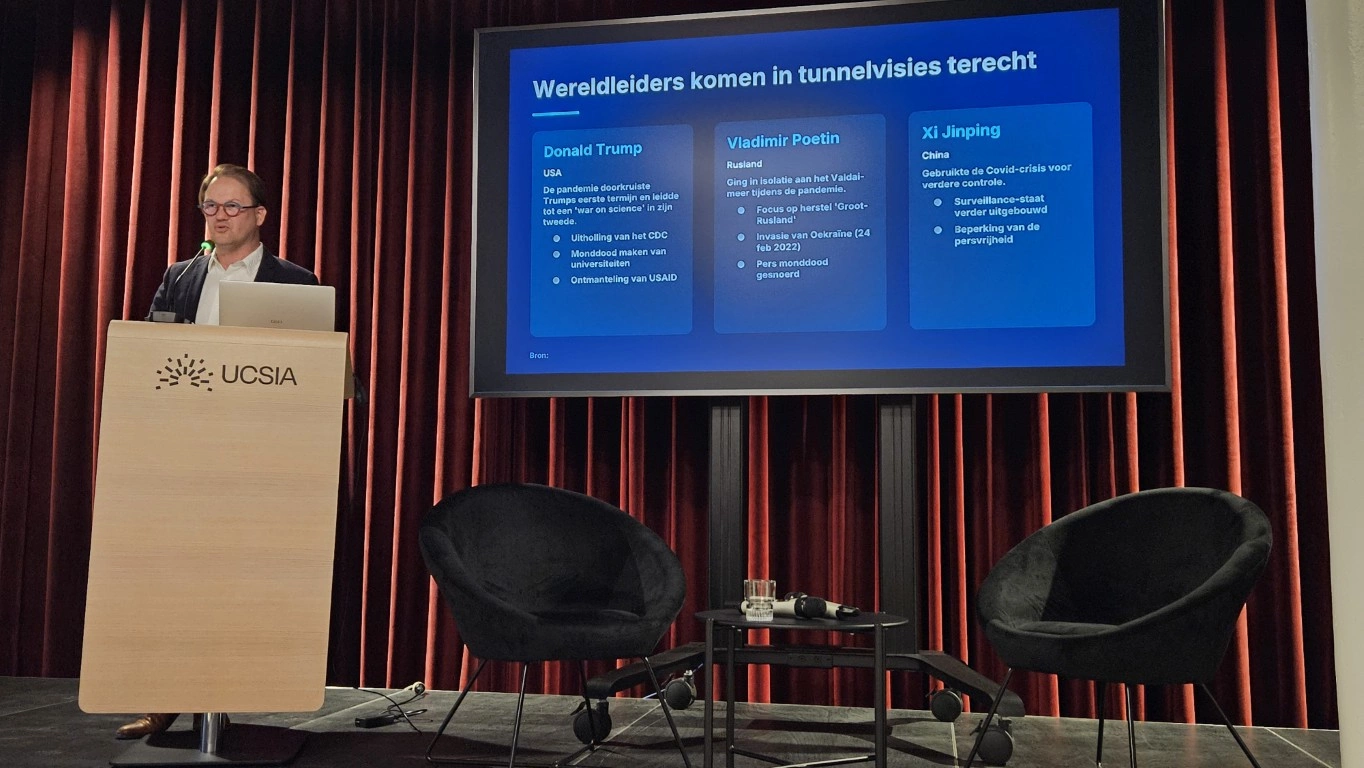
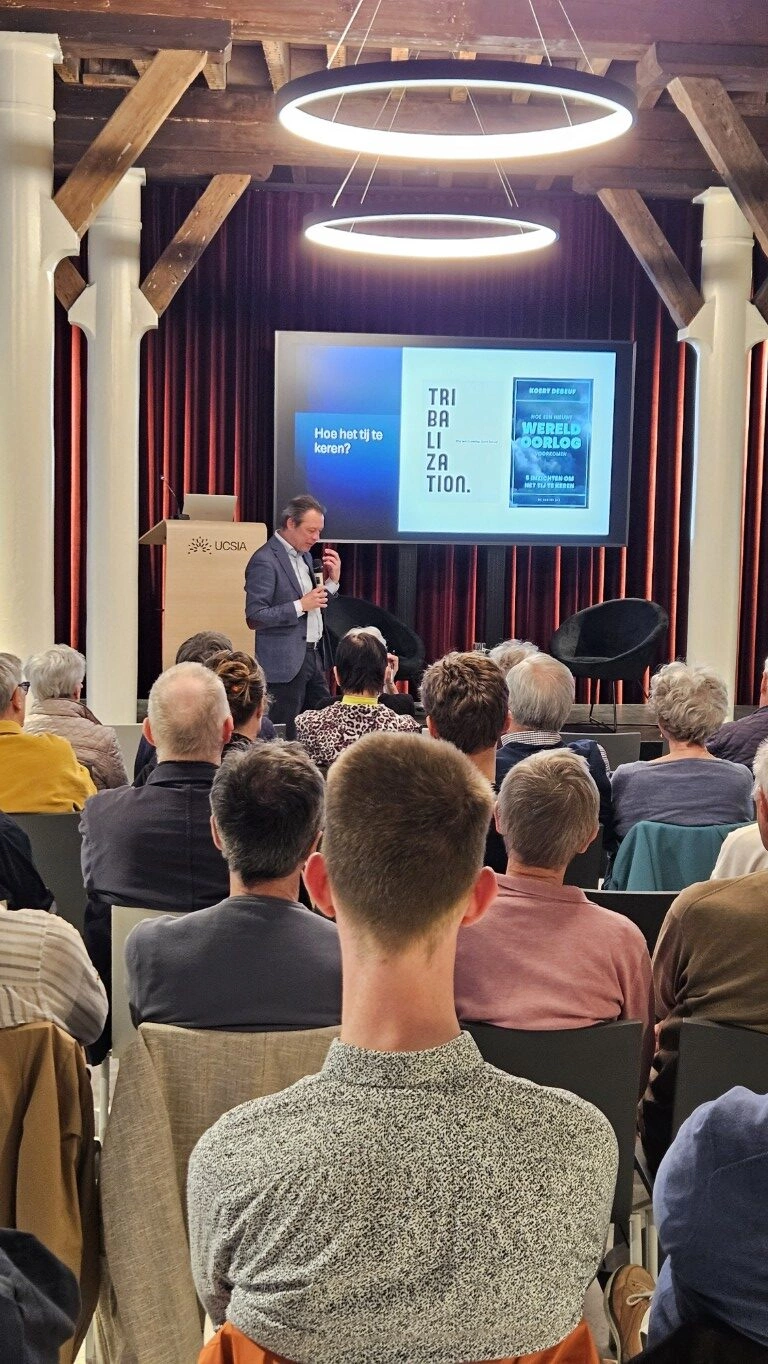
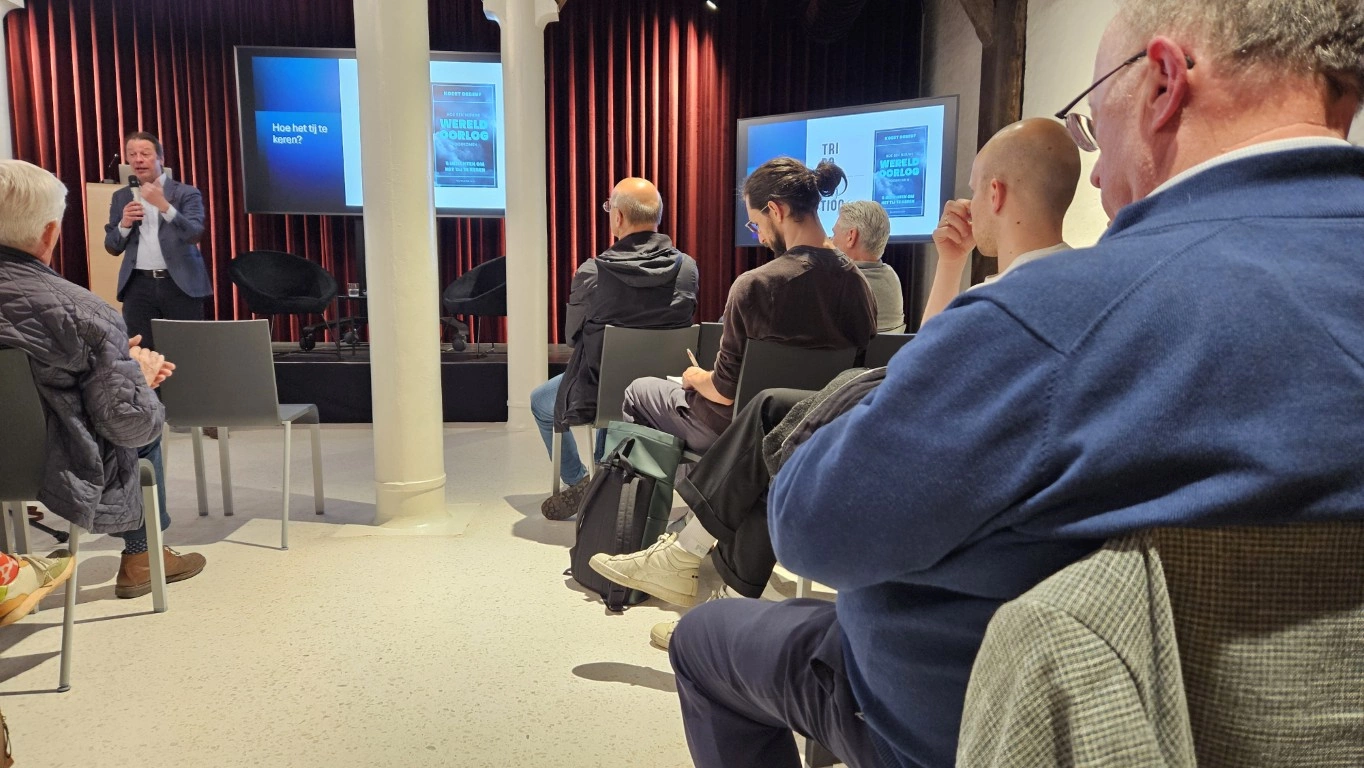
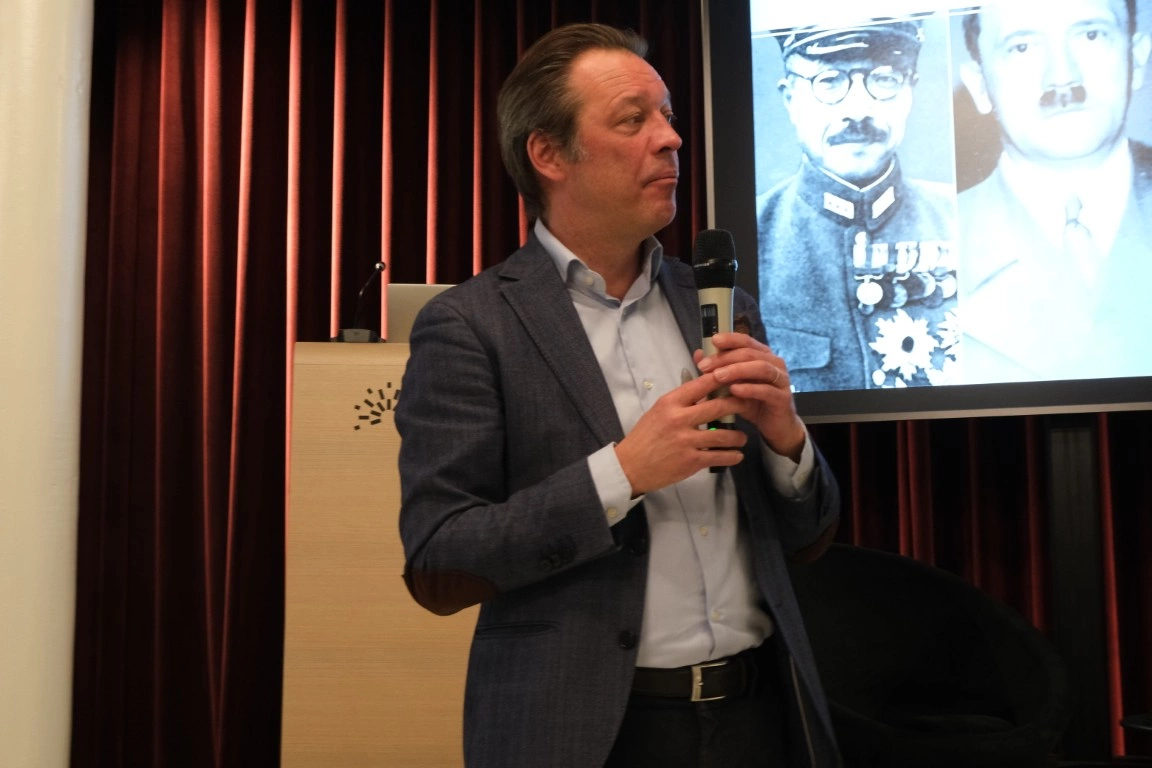
Koert Debeuf, philosopher, historian and geopolitical analyst at VUB, opened the evening with a broad historical perspective. His central argument: what we are experiencing today is neither a coincidence nor a rupture. Globalization and tribalization have been alternating for centuries.
Since 2006 – long before COVID – democracy, press freedom and global trade have been in steady decline. The attack on the Capitol, the rise of authoritarian leaders, and the return of trade barriers are all symptoms of a deeper downward spiral.
COVID could have broken that spiral. In the first weeks of the pandemic, there seemed to be a kind of collective awakening: neighbours throwing bunting across balconies to celebrate birthdays, applause for healthcare workers, a sense of shared vulnerability.
But the opposite happened. The lockdowns intensified polarization, the anti-vaccine movement grew faster than expected, and the absence of face-to-face diplomatic contact – two years without G7, G20 or informal meetings – has left deep marks.
Debeuf illustrated this with the famous photo of Putin and Macron sitting at opposite ends of a long white table. That absurd distance was not just symbolic: it reflected how global politics, shaped by COVID, had shifted towards mutual distrust and hardened positions. Eleven days later, Russia invaded Ukraine…
His message to the audience was both sober and hopeful: the way out of tribalization does not lie in armament, but in dialogue. And that dialogue starts with each of us – for example, by consciously disrupting algorithms and reading opinions we do not agree with.
The media as ammunition, target and defuser
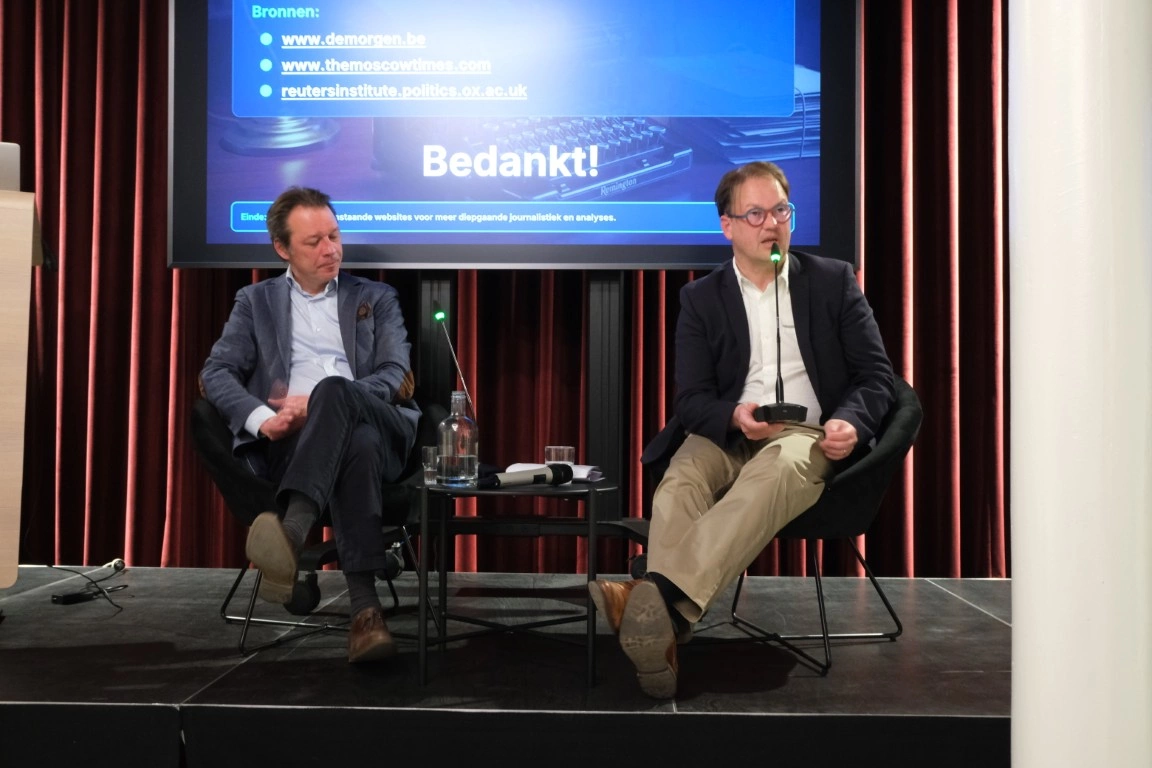
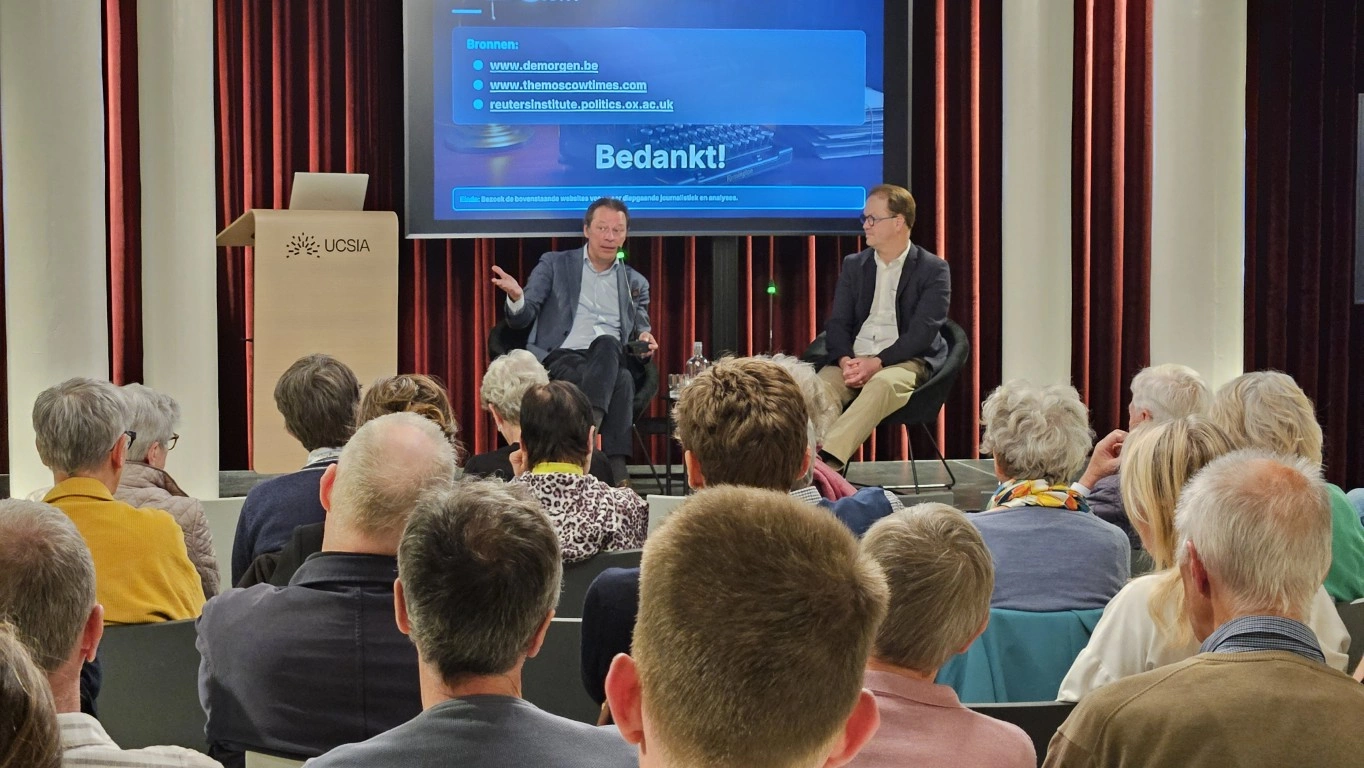
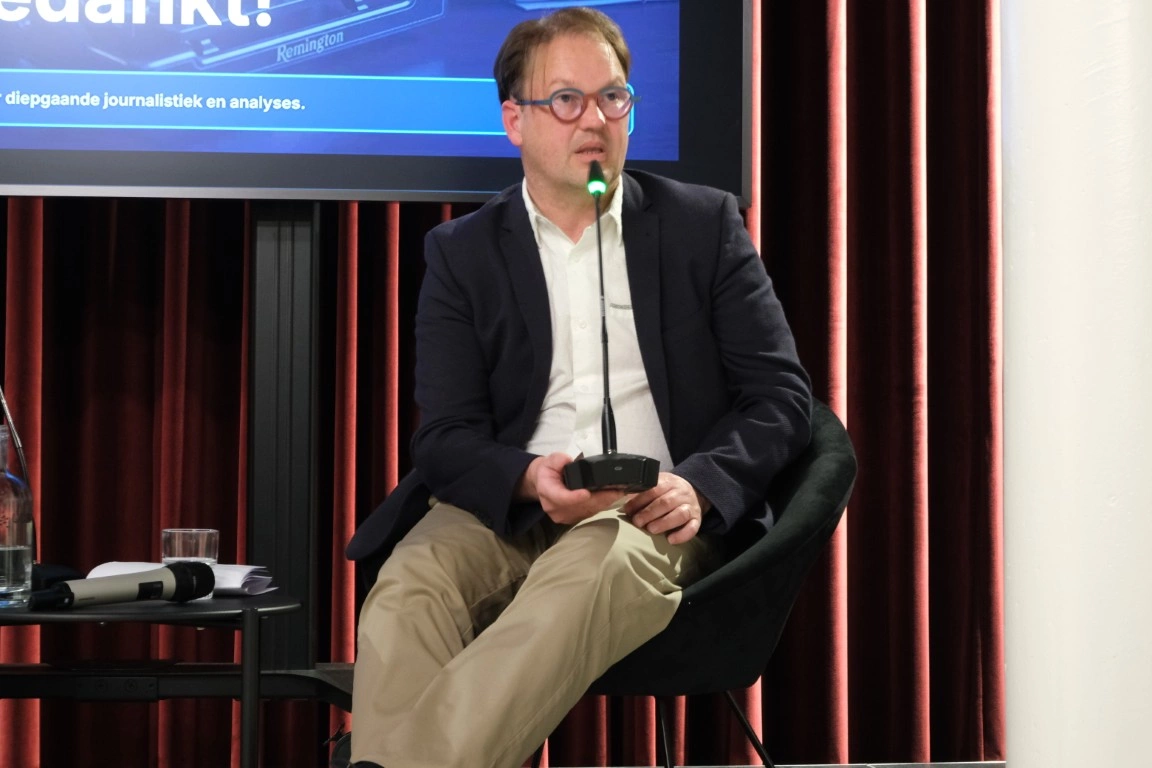
Maarten Rabaey, a journalist with thirty years’ experience in international politics at De Morgen, examined these shifts from a different yet closely related perspective: that of the press itself.
COVID has changed journalism forever. The bustling newsroom of the past, where journalists were out in the field every day and someone was posted abroad every month, gave way to remote desk work. In-depth reporting – putting a face to hard data and speaking to people experiencing war or crisis at first hand – became extremely difficult overnight.
It was precisely the places that needed that presence the most that were most often overlooked: conflict zones and the Global South, where the UN identified a veritable ‘pandemic of human rights violations’.
Moreover, COVID led to a clear break in public trust in the media. Journalists brought bad news – lockdowns, extensions, new restrictions – and were seen by part of the public as the messengers of those measures. The distrust that emerged at the time has never fully disappeared.
Rabaey outlined how, in today’s great power conflicts, the media are being pushed into three roles at once.
As ammunition: Russia spreads false information through professional propagandists and sophisticated disinformation campaigns, not only within its own borders but also in Africa and Europe. One example is the exposed network Voice of Europe.
As a target: more than 260 journalists have already been killed in Gaza and Lebanon, while China is currently holding 123 journalists in prison. Censorship and restricted access for the press are not marginal phenomena, but a deliberate strategy, both in authoritarian states and in conflict zones where independent reporting is actively suppressed.
And as a potential defuser: collaborative investigative journalism networks such as OCCRP show that cross-border journalism is indeed capable of exposing abuse of power.
He ended with a positive example closer to home: DPG Media, which offered the entire editorial team of The Moscow Times a safe base in Amsterdam, from where they continue to reach Russian readers via VPN and satellite channels, the modern equivalent of Samizdat, the clandestine carbon-copy newspaper that Soviet dissidents passed from hand to hand to evade state censorship.
Questions from the audience: Europe, dialogue and hegemony
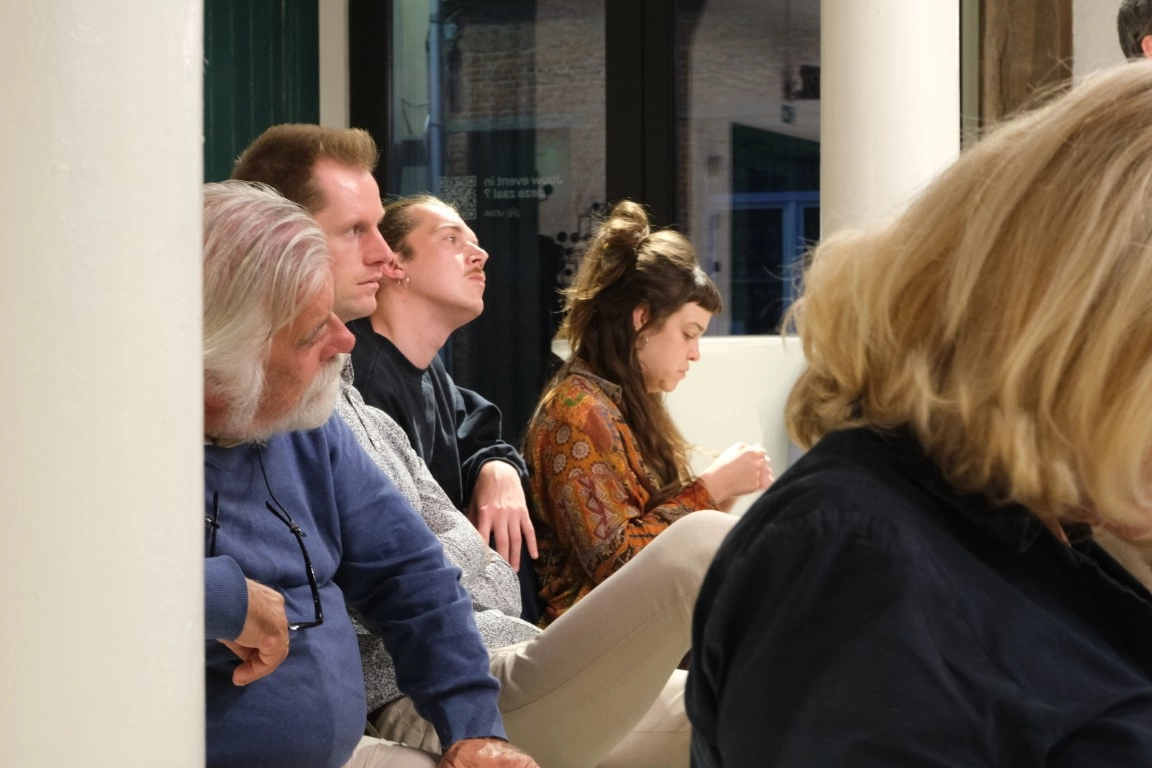
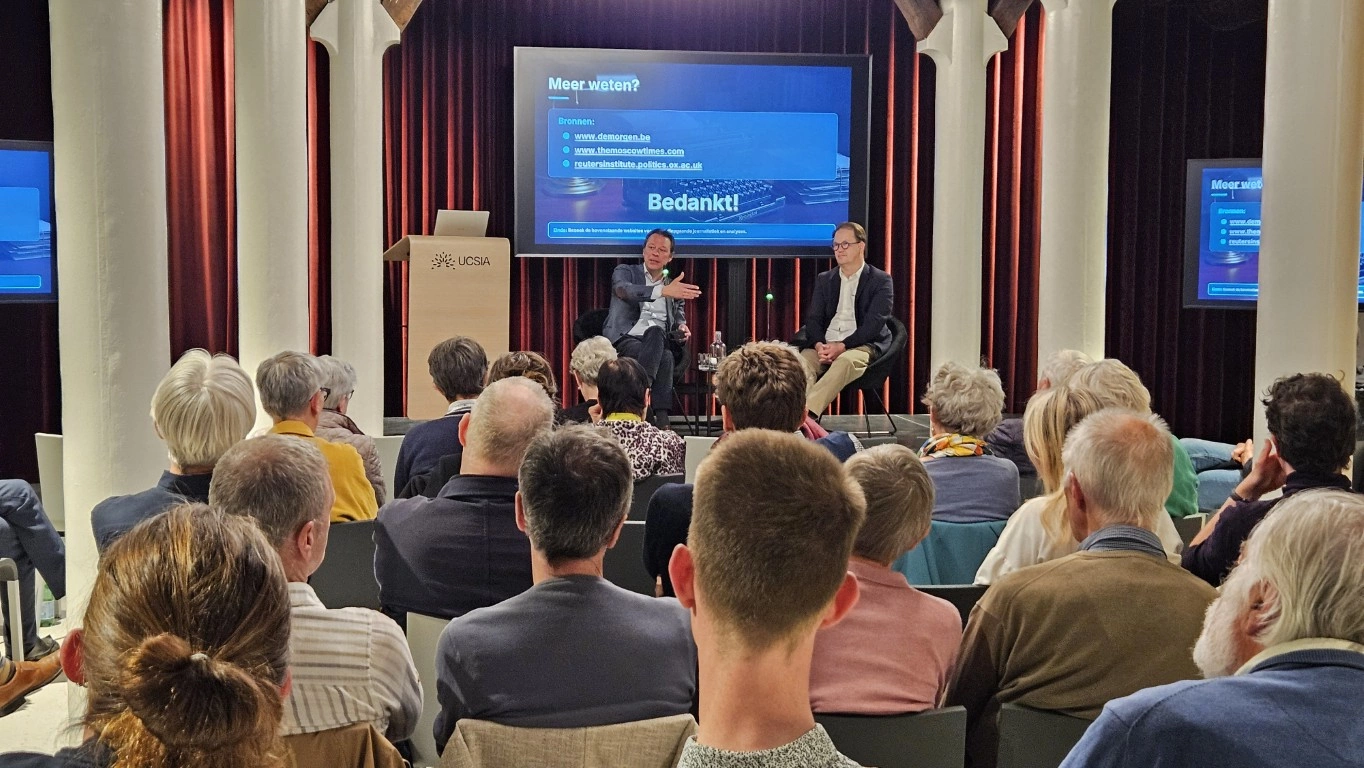
The evening ended with a lively Q&A session. Two questions stood out in particular.
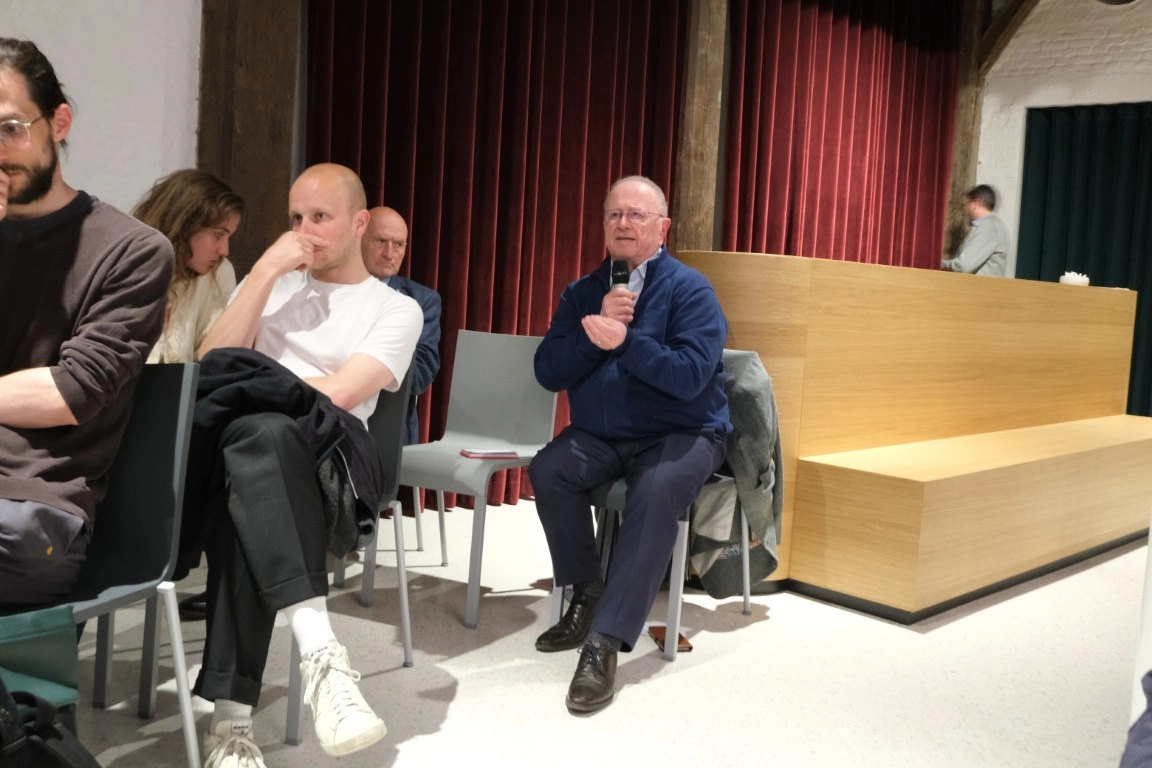
Luc Cortebeeck, former president of the ACV, raised the question that was on many people’s minds in the room: what role is left for Europe?
Debeuf was frank: in recent years, Europe has lost a great deal of credibility in the areas of human rights and international law, including through its ambiguous stance on the conflict in Gaza. Yet he believes the tide can turn – though this will require action. “If there is one continent that can do it, it will be Europe,” Debeuf said. He hopes Europe will once again rise to the challenge and place international law and human rights at the forefront.
Rabaey added that medium‑sized countries — including EU member states, but also Canada — can play an active role in this together.
Another participant raised a more fundamental question: is the current global disorder not simply the logical consequence of the end of American unipolar hegemony after the Cold War?
Debeuf added nuance: in 2001, the world did not feel like a system dominated by the United States, but rather like an open space full of possibilities. It was only later – especially with Trump – that the feeling grew that the US had become a flawed hegemon. The idea that democracy and free trade are inextricably linked proved to be far more fragile than we thought.















U-turn: 5 years later
This was the final lecture in the series U-turn: 5 years later, in which we explored the lasting impact of the COVID period.
When COVID-19 broke out in 2020, our society came to a standstill. Suddenly, there was space to imagine a new way of living together, with greater attention to humanity, solidarity and social justice.
Five years have passed. What is left of those noble intentions?
Discover the other lectures in the series:
Listen to the podcast Solidariteit Spreekt!
In the first season of our podcast Solidariteit Spreekt, we build up towards the lecture series U‑turn: 5 years later.
Journalist Linda De Win, together with experts, examined developments in solidarity, sustainability, and future thinking through the lens of the COVID period.
Discover the podcast series Solidariteit Spreekt!
- Urban sociologist Stijn Oosterlynck (University of Antwerp) and Naima Charkaoui (11.11.11) on solidarity and international cooperation
- Cathy Macharis (House of Sustainable Transitions – VUB) and Eva Smets (Oxfam Belgium) on sustainability and social justice
- Bert De Munck (University of Antwerp) and Jorgen Stassijns (Sciensano) on thinking about the future