In Conversation with Curator Robrecht Neyrinck
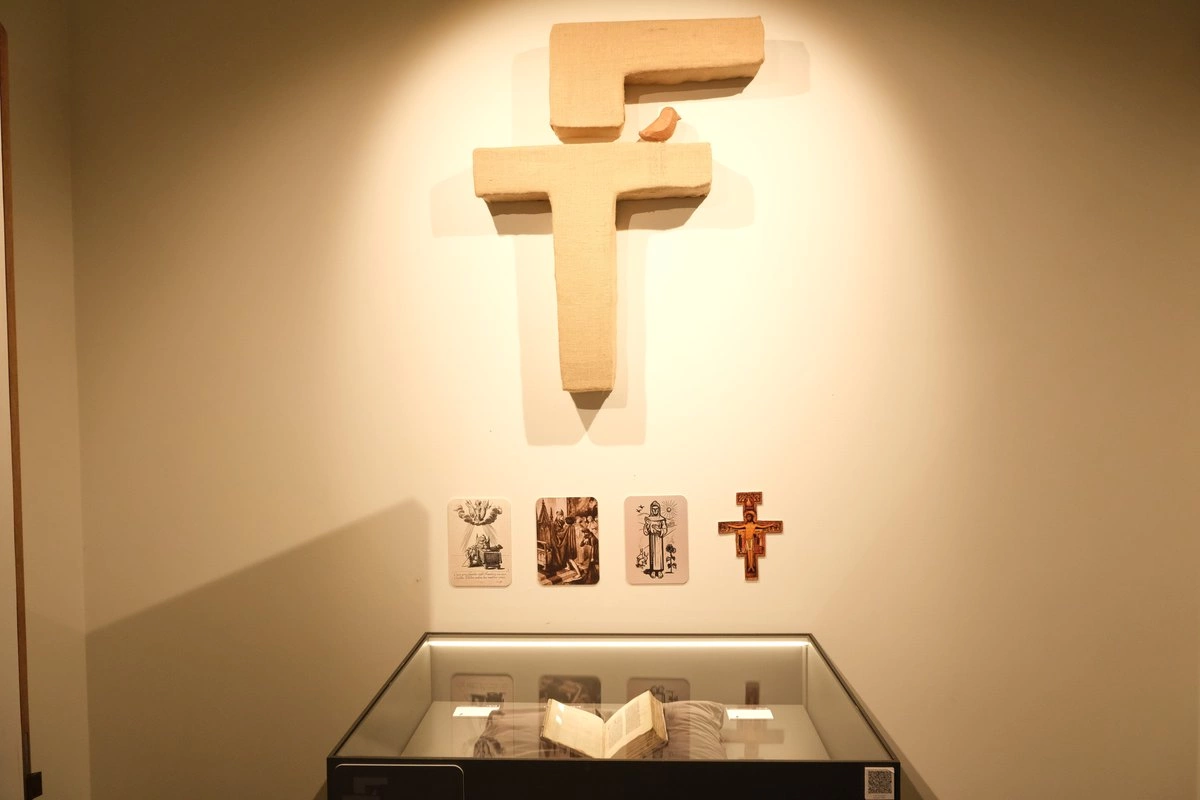
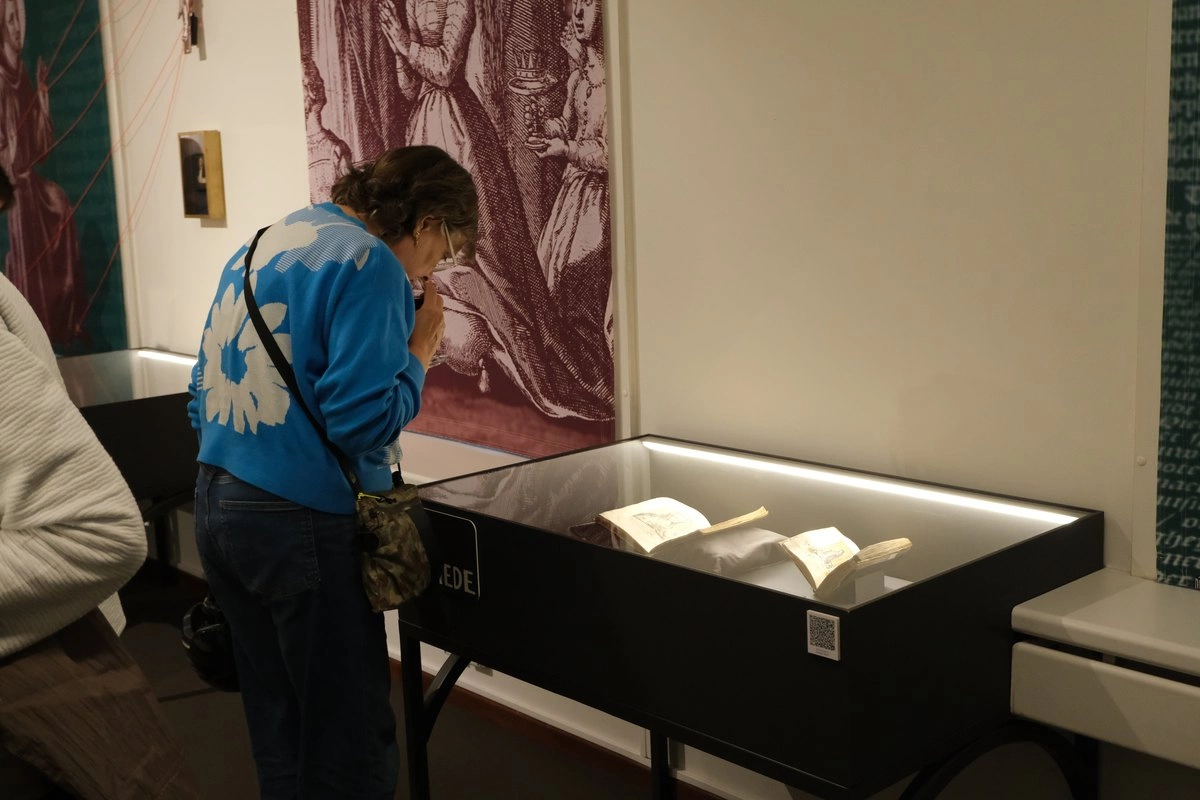
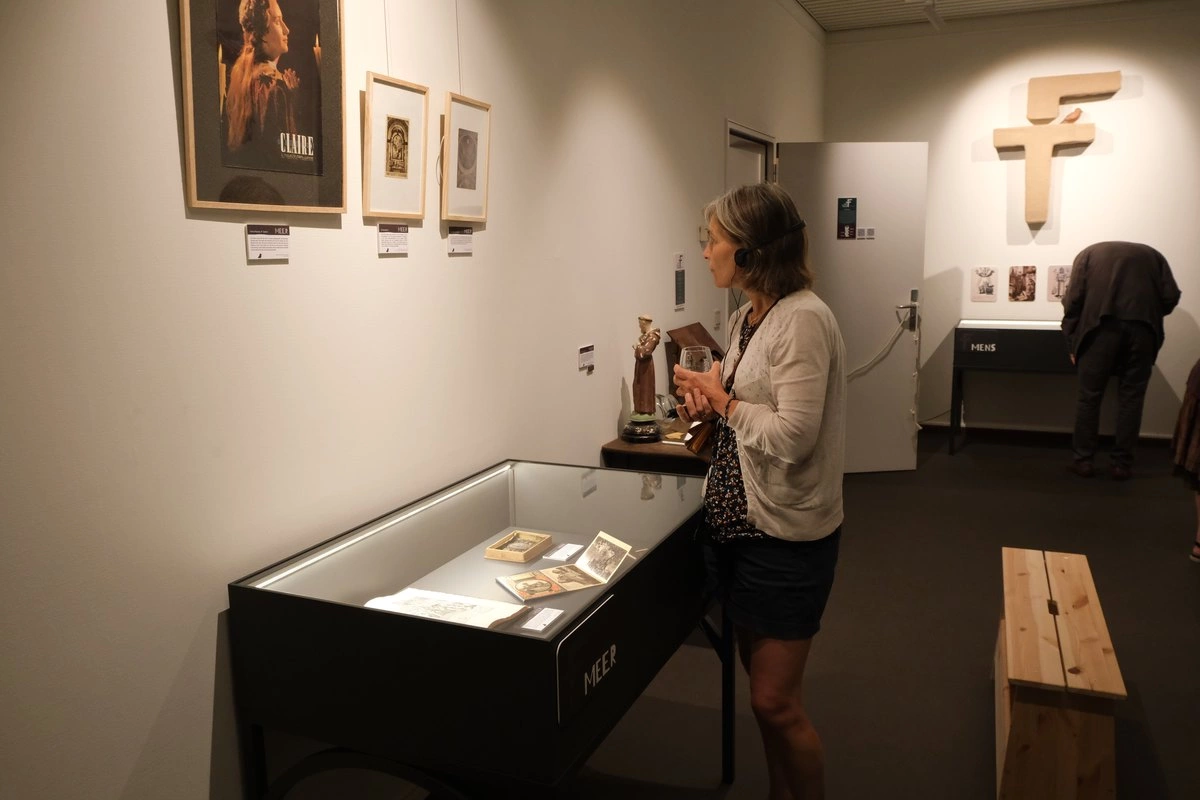
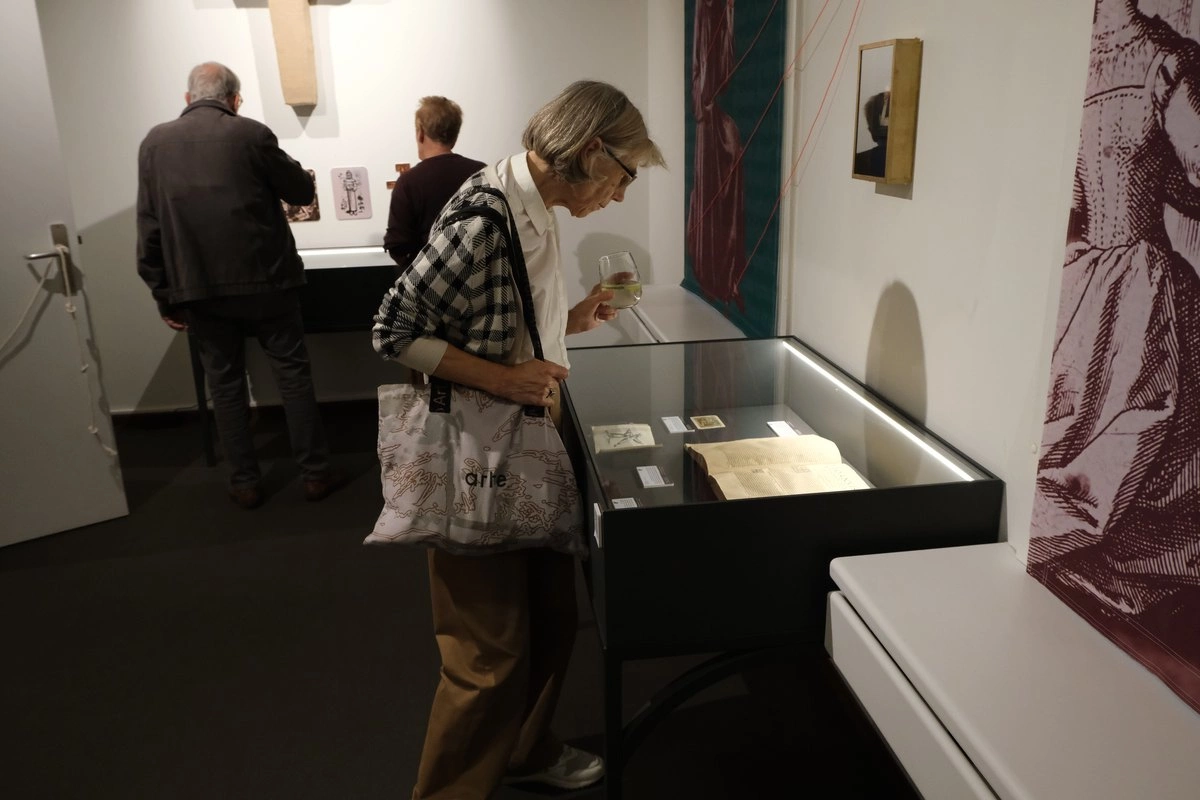
From 2 October 2026 to 29 January 2027, you can visit the exhibition Eight Centuries Less in the exhibition space of the Ruusbroec Institute Library (University of Antwerp).
The exhibition showcases some of the most remarkable and unexpected traces of Saint Francis and his companions preserved in the collection. Robrecht Neyrinck explored the collection’s rich holdings to curate this unique exhibition on behalf of the Jesuit Heritage Foundation.
Over the past century, the library’s collection was largely assembled by the Jesuits who worked at the Ruusbroec Institute. How is the Franciscan tradition reflected in the collection?
“What makes the Ruusbroec Institute Library’s collection special is its focus on the history of religious devotion in the Low Countries. The material spans the period from the Middle Ages to the modern era,” Robrecht explains in the library’s exhibition space.
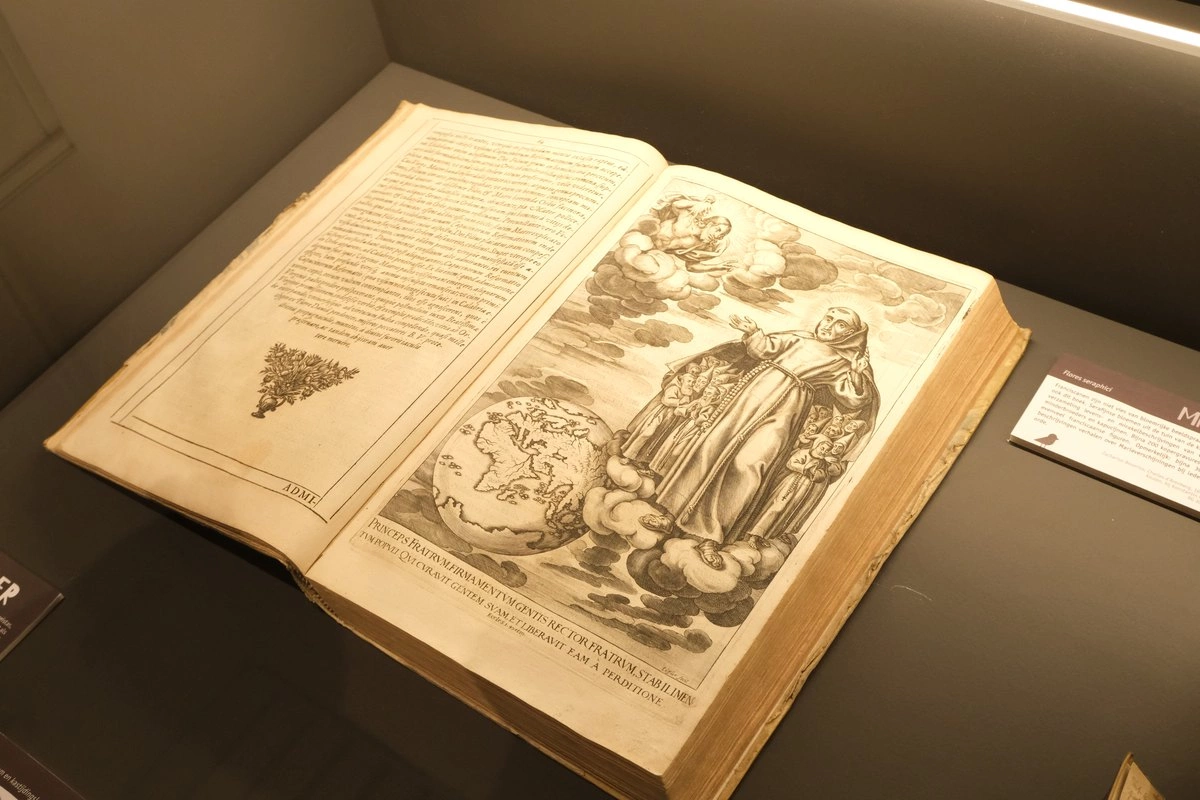
“The Ruusbroec Institute was founded in 1925. The Jesuit fathers who established it wanted their own order to be well represented on the bookshelves, but they were also interested in the heritage of other religious orders. Thanks to the enthusiasm of its founder, Father Stracke, as well as of the later Jesuit fathers and staff members of the Ruusbroec Institute, the library’s shelves and storage rooms now hold a wealth of Franciscan material.”
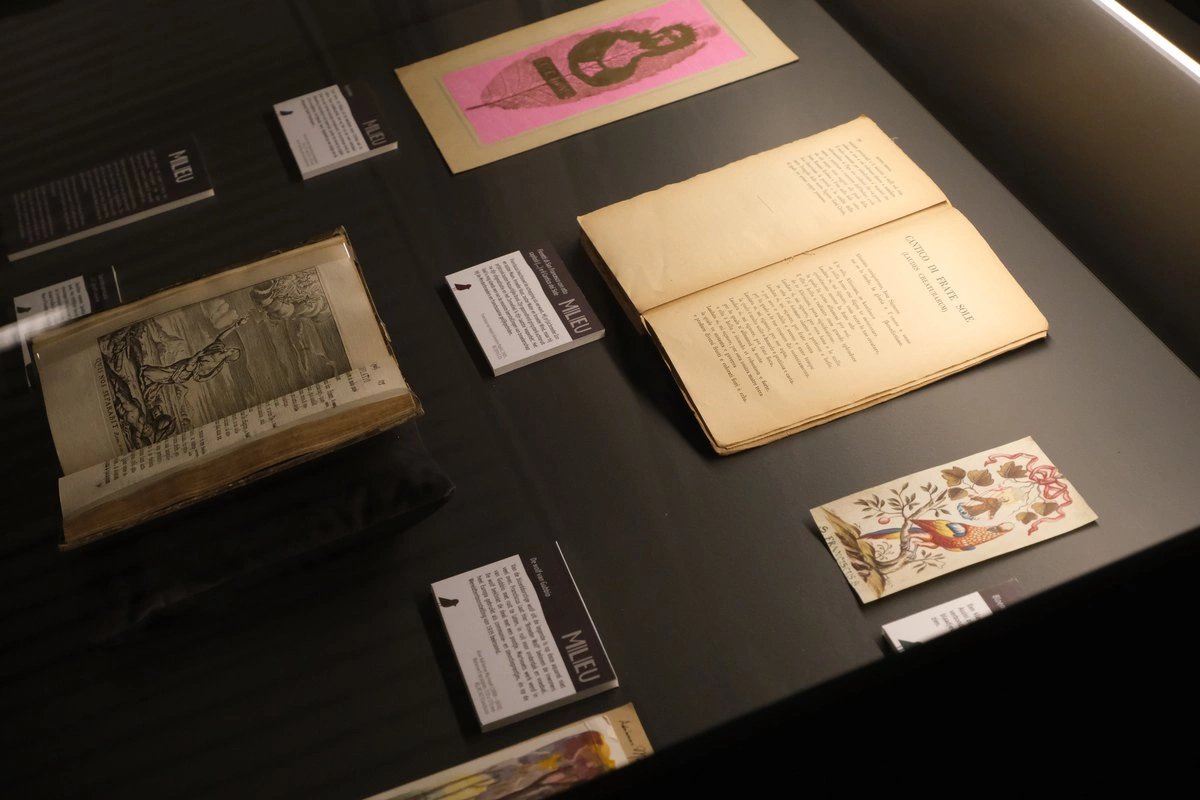
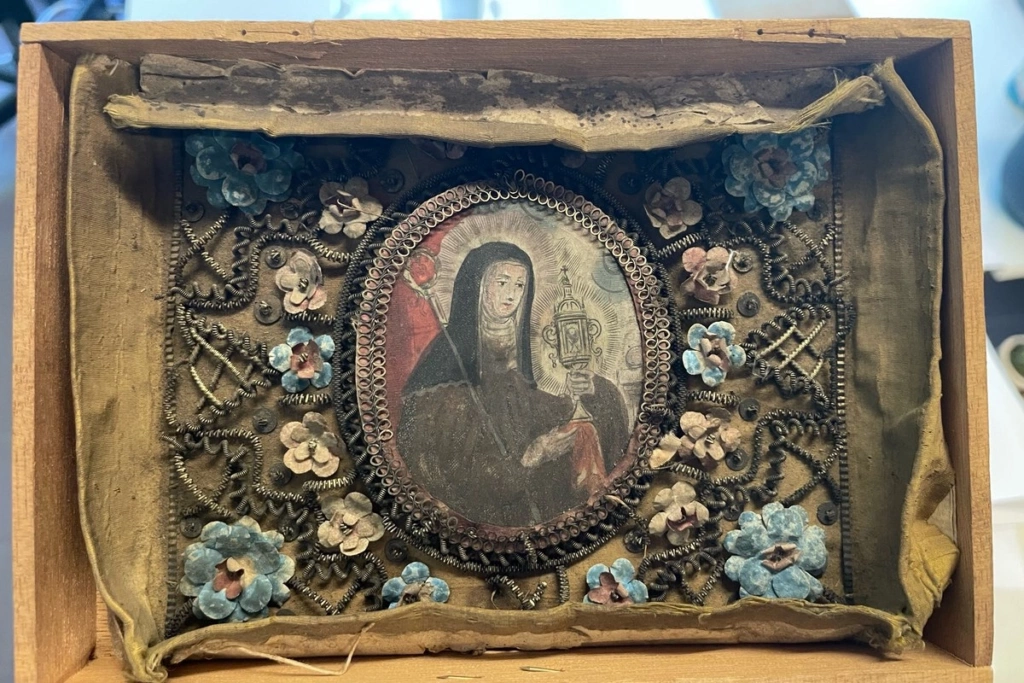
“The collection is not limited to early printed books in various formats, including editions of the Rule of the Third Order or the Testament of Saint Francis. It also contains, for example, fifteenth-century Latin manuscripts about the life of Francis of Assisi. I even came across a hand-painted, expertly crafted and framed image of Saint Clare, probably made by the Poor Clare Sisters themselves.”
Choosing from such a vast array of objects doesn’t seem like an easy task. How did you go about it?
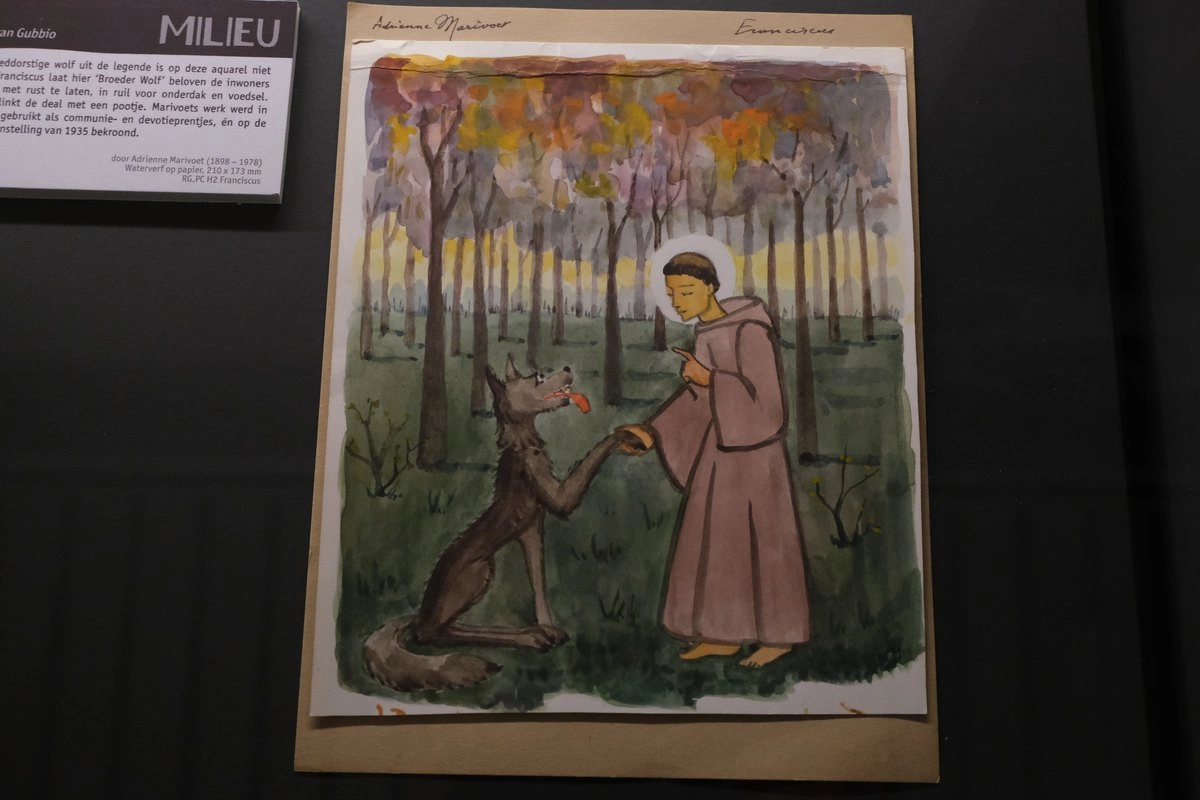
“Finding material in the library was no problem at all. That is why, with Eight Centuries Less, we wanted to focus specifically on the Franciscan traces embedded within our own Jesuit heritage. The exhibition is divided into six sections, each highlighting a key concept associated with Francis and his legacy through items from the collection.”
‘Human’ outlines the life of Francis as a physical human being. ‘Mysticism’ focuses on his stigmatization, his influence on Jan van Ruusbroec (1293–1381), the foremost mystic of the Low Countries, and on Sister Rumolda (1886–1948), a Franciscan nun from Herentals who bore the stigmata. For the first time, we can show the wider public photographs of her stigmata and even her habit – a unique opportunity. The ‘Together’ section tells the story of the ‘flowers’ in the Franciscan garden, referring to the various orders within the Franciscan family. ‘Environment’ draws a connection with Pope Francis, who took inspiration from the Canticle of the Sun for his climate encyclical Laudato si’ (2015). ‘Less’ focuses on the order’s distinctive ideals of poverty, while ‘More’ explores the Jesuit motto magis.”
“To mark the anniversary of Saint Francis’s transitus, the day of his death, we wanted to offer a fitting addition to the many works published this year, and those still to come. Made possible by the Jesuit Heritage Foundation, the exhibition showcases some surprising objects while also adding that distinctive Ruusbroec twist.” (laughs)
Did you discover any stories, anecdotes or objects in the collection whose background was previously unknown to you?
“For the book Goddelijke gerechten (2025), which I co-authored with Professor Tine Van Osselaer, I had already delved deeply into the library’s collection. This exhibition gave me the opportunity to approach the collection from a completely different angle. Rather than focusing on culinary history, the emphasis here was on the history of devotion within the Franciscan Order in the Low Countries.
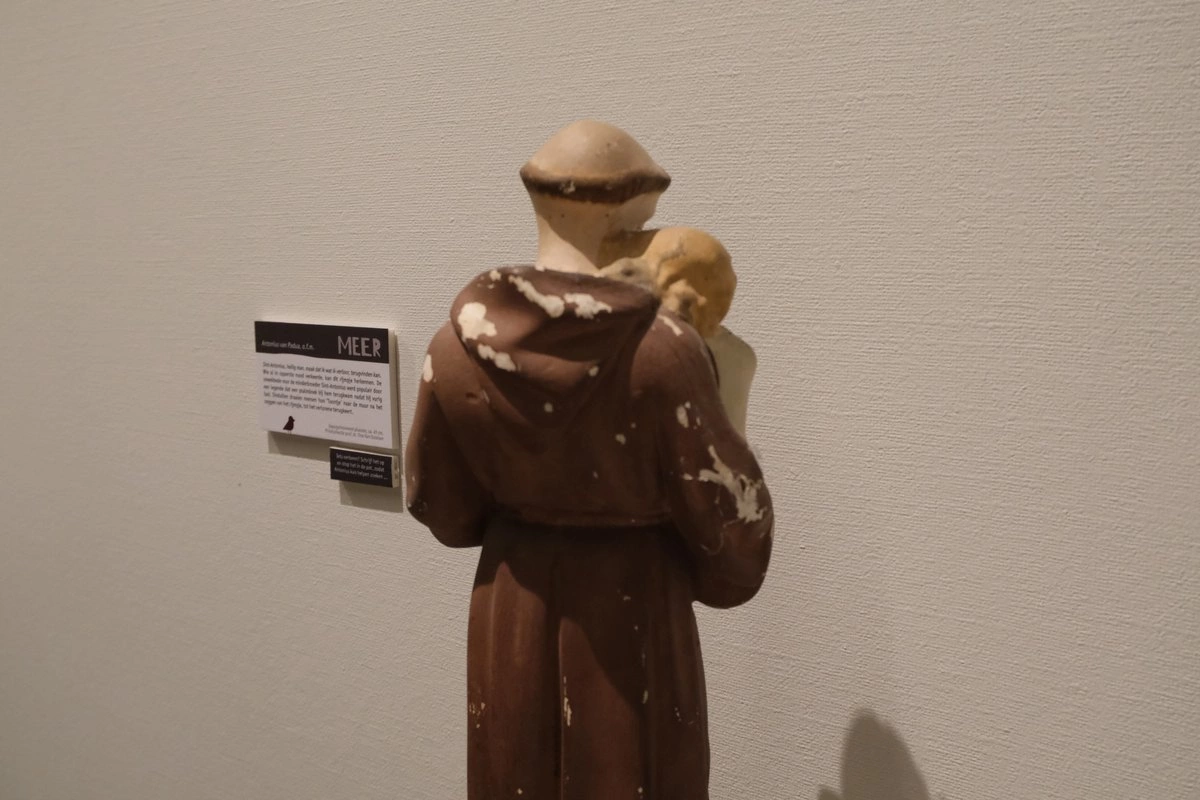
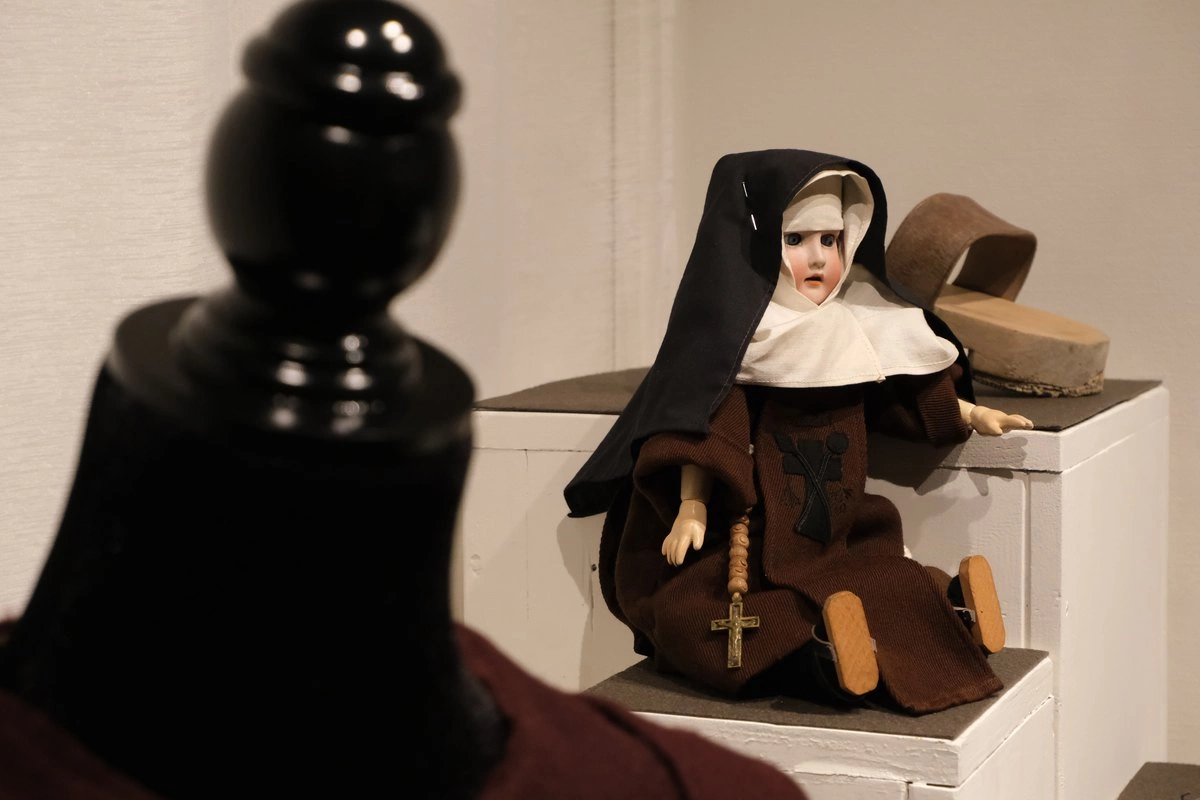
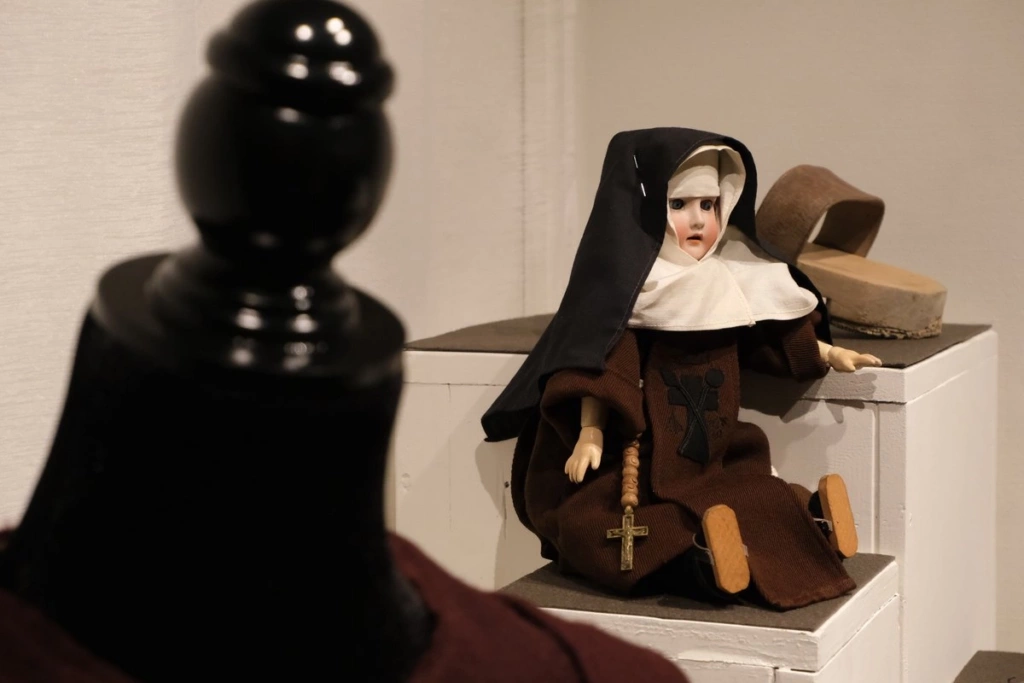
The collection is still growing, too. Last year, for example, we acquired a wonderful collection of objects related to Marian devotion from the Franciscan convent in Herentals. Among them, I discovered three remarkable little dolls, each dressed in the order’s traditional habit. One of the dolls blinks when you lay it down, which earned it a place in the exhibition.
To me, sources like these challenge the image of religious orders as hyper-pious and deeply devout. Sometimes, they simply have dolls with blinking eyes dressed in the same clothes they wear themselves. Wonderful, isn’t it?
The Ruusbroec Institute also has collections that focus on ‘lived religion’. Of course, we preserve old Bibles, theological treatises and episcopal decrees, but it is often more interesting to look at what is happening in the margins. Which words were scratched out in this missal? And who doodled a little figure opposite the title page of that emblem book?
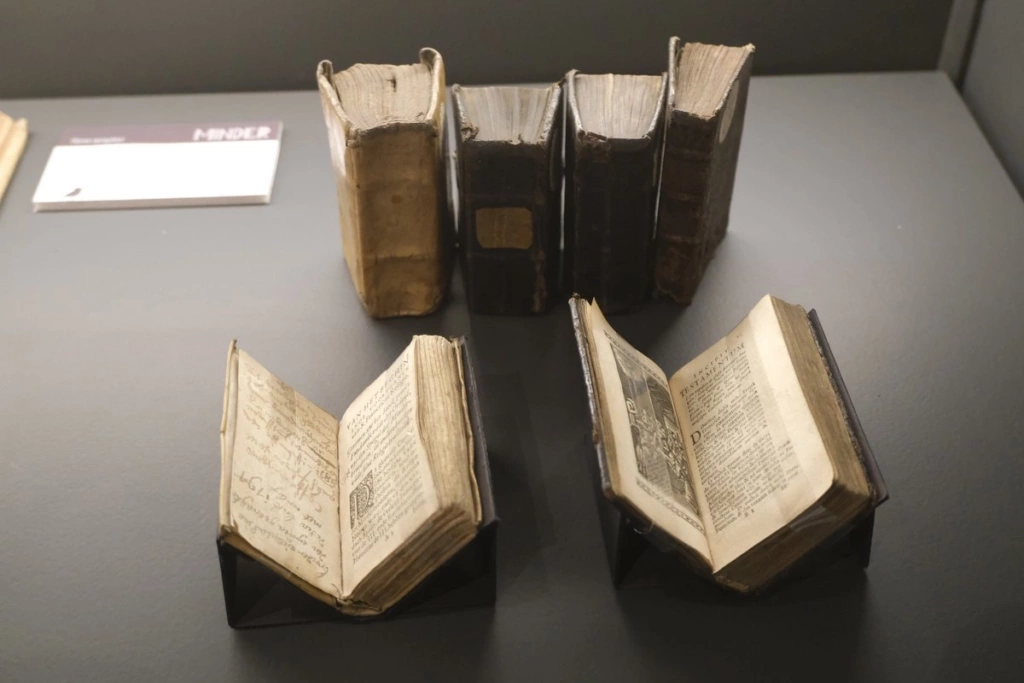
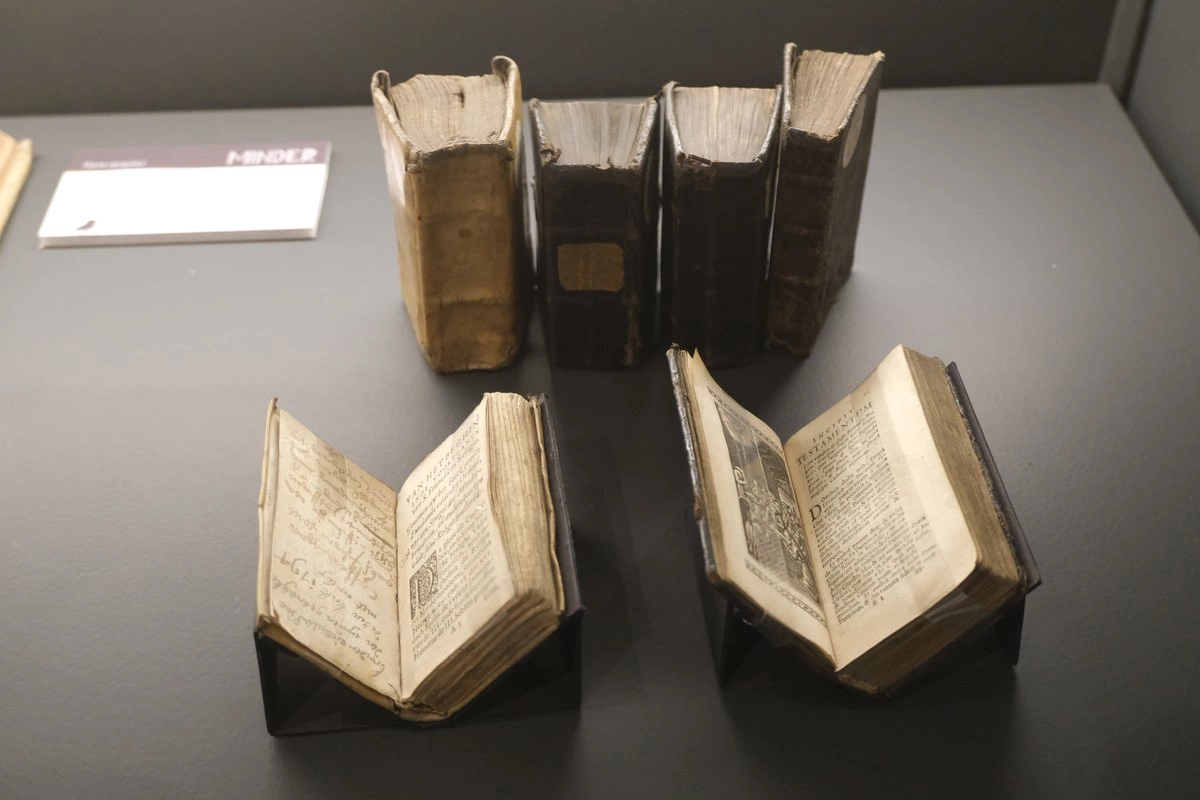
Another source in the exhibition, or rather five of them, consists of tiny booklets measuring just 9 by 5 cm, containing the Rule and the Testament of Francis of Assisi. The Friars Minor were known for their commitment to living without possessions. It is therefore striking that the first pages contain an inscription granting permission from the superior to carry the booklet. The handwritten phrase ‘met orlof’ (‘with permission’) appears several times on the same page. This clearly shows that the booklet had a number of successive owners, each of whom was granted a one-off exemption from their ideal of poverty. When it came to the words of the saint from Assisi, they were apparently willing to turn a blind eye.” (winks)

Robrecht Neyrinck
Robrecht Neyrinck (1998) has been a Digitalization Officer at the Ruusbroec Institute Library (University of Antwerp) since January 2026.
He is also the project coordinator of ‘Eight Centuries Less’ at UCSIA, on behalf of the Jesuit Heritage Foundation. Together with Professor Tine Van Osselaer, he wrote the book Goddelijke gerechten. Smullen van religieus erfgoed (Divine Dishes: Savouring Religious Heritage) (2025) to mark the centenary of the Ruusbroec Institute.
The exhibition
From Francis’s youth in Assisi to the Jesuit concept of magis: explore the surprising traces of Francis of Assisi in the collection of the Ruusbroec Institute Library. Discover manuscripts, devotional prints and, for the first time, Sister Rumolda’s habit.
You can visit the exhibition free of charge until 29 January 2027 at the Ruusbroec Institute Library, Grote Kauwenberg 34, 2000 Antwerp.
The Lecture Series
How do Francis’s ideas on peace, poverty and ecology live on today? UCSIA explores insights and answers in a new lecture series accompanying the exhibition.
- On peace on 26 November 2026 - a joint lecture with Barbara Mertens (TAU) and Bénédicte Kusendila (Pax Christi Flanders)
- On poverty on 10 December 2026 - a webinar (in English) with Neslihan Şenocak (Columbia University)
- On poverty on 10 December 2026 - a lecture with Pascal Debruyne, lecturer and researcher (Odisee University College)
- On caring for the earth on 17 December 2026 - a joint lecture with Marianne Ritsema van Eck (Vrije Universiteit Amsterdam) and Karel Ceule (Broederlijk Delen)
Listen to the audio guide
The exhibition’s audio guide is also available as a podcast. In a single episode, it takes you on a journey through the life of Francis, from his exuberant youth to the Jesuit concept of magis.