Eight Centuries Less. Francis of Assisi
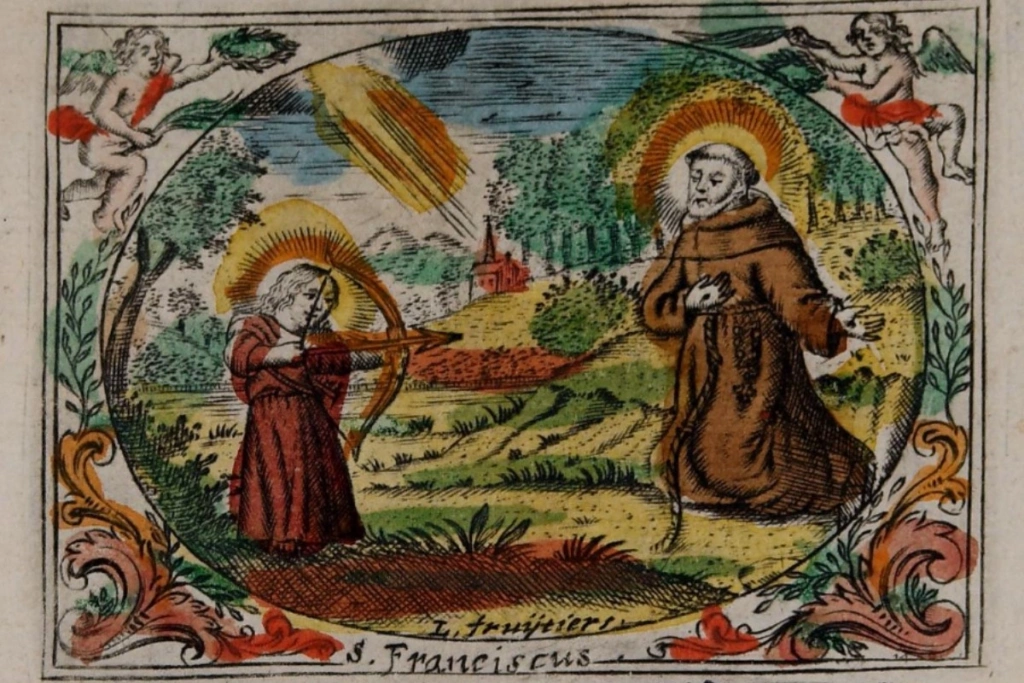
In 1226, Francis of Assisi died. The wealthy merchant’s son who cast his expensive clothes at his father’s feet chose a life without possessions, devoted to serving the poorest. Eight hundred years after his death, his ideas and values continue to inspire people.
Saint Francis laid the foundations for the Franciscan tradition’s approach to and embodiment of peace, poverty and care for the earth.
On 26 November, 10 and 17 December, UCSIA invites historians and professionals from the social sector to explore these ideas and ideals of peace, poverty and ecology, placing them in context and assessing their relevance in the light of today’s challenges.
The lecture series is linked to the exhibition Eight Centuries Less at the Ruusbroec Library of the University of Antwerp.
Francis of Assisi and peace -The enemy, my brother
Lecture by Barbara Mertens (TAU)
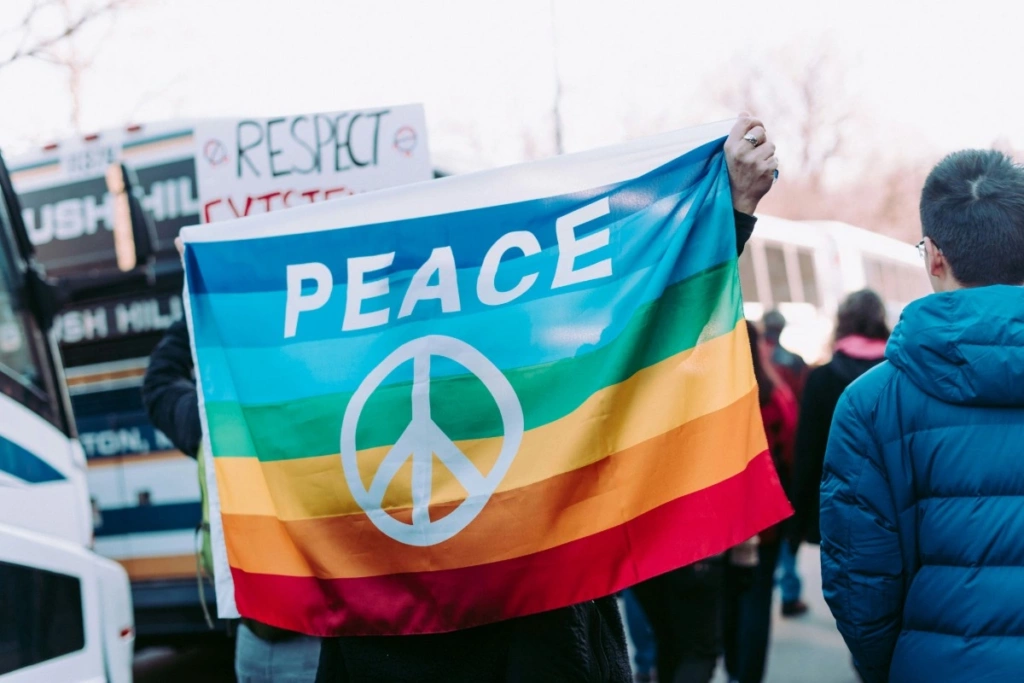
“Peace be to this house!” With this evangelical greeting of peace, Francis of Assisi and his brothers travelled through war-torn Italy. Francis recognized that the human desire for possessions lay at the root of the violent conflicts that also afflicted the town of Assisi. His radical choice to live without possessions became his penitential response to the violence of his time. For those who possess nothing have nothing to defend.
Francis knew that, to proclaim peace, peace must first live even more deeply within one’s own heart. That is why he also set his brothers on an inner path of renunciation. Those who accept and embrace their own poverty and vulnerability with joy can be close to every creature – however vulnerable or different – as an equal. His encounter with a leper had brought Francis to this insight. In the same spirit, at the height of the Crusades, he later set out full of confidence and unarmed to meet the Muslim sultan, wishing him peace and recognizing in him a brother.
In this lecture, we explore how Francis of Assisi’s penitential life is ultimately about restoring relationships. The Franciscan message of peace remains, even today, an invitation to restore our broken relationships with others, with creation and with God.
Barbara Mertens is historian and completed a further qualification in Intercultural Management (CIMIC). After many years of working in refugee support, she has been working as a staff member specializing in Franciscan spirituality at TAU since 2017.
Spirituality of peace – Non-violence as a path to fraternity
Lecture by Bénédicte Kusendila (Pax Christi Flanders)
“Blessed are the peacemakers.” With these words from the Sermon on the Mount comes an invitation that may be more radical today than ever before. In a world where war, polarization, dehumanization and fear are increasingly prevalent, peace can sometimes seem an unattainable ideal. Yet according to the Christian tradition, peace does not begin somewhere far away, but close to home: in our hearts, in our words and in the way we look at others.
Francis of Assisi, too, did not choose the logic of power and violence, but a path of simplicity, encounter and fraternity. For Francis, peace was not the absence of conflict, but the restoration of relationships: with God, with others and with creation. In the same Franciscan spirit, Pope Francis, in Fratelli Tutti, invited us to learn once again to see every person as a brother or sister. The parable of the Good Samaritan serves as a concrete guide in this regard: not to pass by those who suffer, but to allow ourselves to be moved, to draw near and to take responsibility.
Drawing on this Franciscan and Gospel-inspired tradition, this lecture explores how Pax Christi Flanders gives shape to spirituality of peace today and places it at the heart of its work. As a peace movement, Pax Christi Flanders is committed to peace and security, reconciliation and justice by keeping the Franciscan and Christian tradition alive and putting it into practice every day. In this context, non-violence is not passivity, but an attitude that breaks the cycle of violence and consciously chooses a different logic: one of dialogue, solidarity, justice and human dignity. From this perspective, diplomacy, international solidarity, democracy and responsible security policy can also be reconnected to one fundamental question: how do we build a world in which no one is reduced to an enemy or treated as human waste?
Bénédicte Kusendila is a poet and sociolinguist (KU Leuven and the University of Cape Town) and has also completed Yale University’s programme ‘Impact Creation through Social Entrepreneurship’. She has worked as a researcher at the University of Antwerp and the United Nations University, and as a volunteer and co-coordinator at House of Compassion Brussels. Today, she is Peace Spirituality Officer at Pax Christi Flanders, where she works on non-violence, peace and justice.
Programme
- 19:00 CET | Doors open
-
19:30 CET | Welcome and introduction
by Erik De Bom, Director of UCSIA -
19:35 CET | Lecture ‘Francis of Assisi and Peace – The Enemy, My Brother’
by Barbara Mertens (TAU) -
20:00 CET | Lecture ‘Spirituality of Peace – Non-Violence as a Path to Fraternity’
by Bénédicte Kusendila (Pax Christi Flanders) - 20:25 CET | Questions from the audience
-
20:30 CET | End of the event and optional visit to the exhibition Eight centuries less
at the library of the Ruusbroec Institute, Grote Kauwenberg 34, 2000 Antwerp
Eight Centuries Less
How do Francis’s ideas on peace, poverty and ecology live on today? Discover the other lectures in the series:
- The Franciscan Virtue of Poverty on 10 December 2026 – a webinar (in English) with Neslihan Şenocak (Columbia University)
- On Poverty on 10 December 2026 – a lecture with Pascal Debruyne, lecturer and researcher at Odisee University of Applied Sciences
- On Caring for the Earth on 17 December 2026 – a joint lecture with Marianne Ritsema van Eck (Vrije Universiteit Amsterdam) and Karel Ceule (Broederlijk Delen)
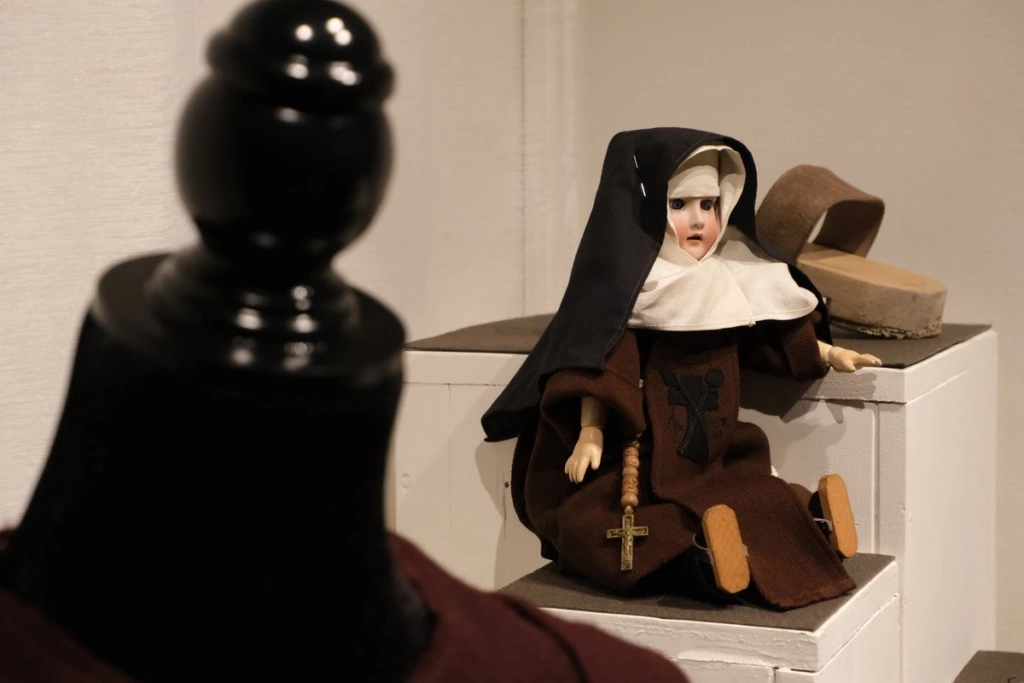
This series ties in with the exhibition Eight centuries less. From Francis’s youth in Assisi to the Jesuit concept of magis: explore the surprising traces of Francis of Assisi in the collection of the Ruusbroec Institute Library. Discover manuscripts, devotional prints and, for the first time, Sister Rumolda’s habit.
You can visit the exhibition free of charge until 29 January 2027 at the Ruusbroec Institute Library, Grote Kauwenberg 34, 2000 Antwerp.