Eight Centuries Less. Francis of Assisi
In 1226, Francis of Assisi died. The wealthy merchant’s son who cast his expensive clothes at his father’s feet chose a life without possessions, devoted to serving the poorest. Eight hundred years after his death, his ideas and values continue to inspire people.
Saint Francis laid the foundations for the Franciscan tradition’s approach to and embodiment of peace, poverty and care for the earth.
On 26 November, 10 and 17 December, UCSIA invites historians and professionals from the social sector to explore these ideas and ideals of peace, poverty and ecology, placing them in context and assessing their relevance in the light of today’s challenges.
The lecture series is linked to the exhibition Eight Centuries Less at the Ruusbroec Library of the University of Antwerp.
The Franciscan Virtue of Poverty
Webinar (in English) by Neslihan Şenocak (Columbia University)
Francis’ poverty is often discussed within the context of literal imitation of Christ that was a hallmark of popular medieval religious movements and as a gateway virtue alongside humility and simplicity.
This talk will connect his altissima paupertas to the early Egyptian monastic movement and argue that, through poverty, he also aimed to create a religious community of equals by erasing social distinctions from wealth.
Neslihan Şenocak is Associate Professor of History at Columbia University. She specializes in medieval religious, intellectual, social and political history. Her research and teaching focus on popular religion, political theology, criminal justice, medieval Italian communes and in particular the ways in which the emerging universities influenced the theo-political institutions of medieval Latin Christendom.
In 2012, Neslihan Şenocak (Columbia University) published the critically acclaimed book The Poor and the Perfect. The book shows how the quintessential Franciscan virtue of simplicity gradually gave way to learning, while study came to be considered an integral part of evangelical perfection.
Programme
-
16:00 CET | Welcome and introduction
by Erik De Bom, Director of UCSIA -
16:10 CET | Lecture 'The Franciscan Virtue of Poverty'
by Neslihan Şenocak (Columbia University) - 16:50 CET | Q&A
- 17:00 CET | Einde
Poverty in the streets
Later that day, Pascal Debruyne (Odisee University of Applied Sciences) will explore the theme of poverty in the present day. In his lecture Visibly Invisible: Begging in Our Society (in Dutch), he will share insights from his book on begging in our cities.
Eight Centuries Less
How do Francis’s ideas on peace, poverty and ecology live on today? Discover the other lectures in the series:
- On Peace on 26 November 2026 – a joint lecture (in Dutch) with Barbara Mertens (TAU) and Bénédicte Kusendila (Pax Christi Flanders)
- On Poverty on 10 December 2026 – a lecture (in Dutch) by Pascal Debruyne, lecturer and researcher at Odisee University of Applied Sciences
- On Caring for the Earth on 17 December 2026 – a joint lecture (in Dutch) with Marianne Ritsema van Eck (Vrije Universiteit Amsterdam) and Karel Ceule (Broederlijk Delen)
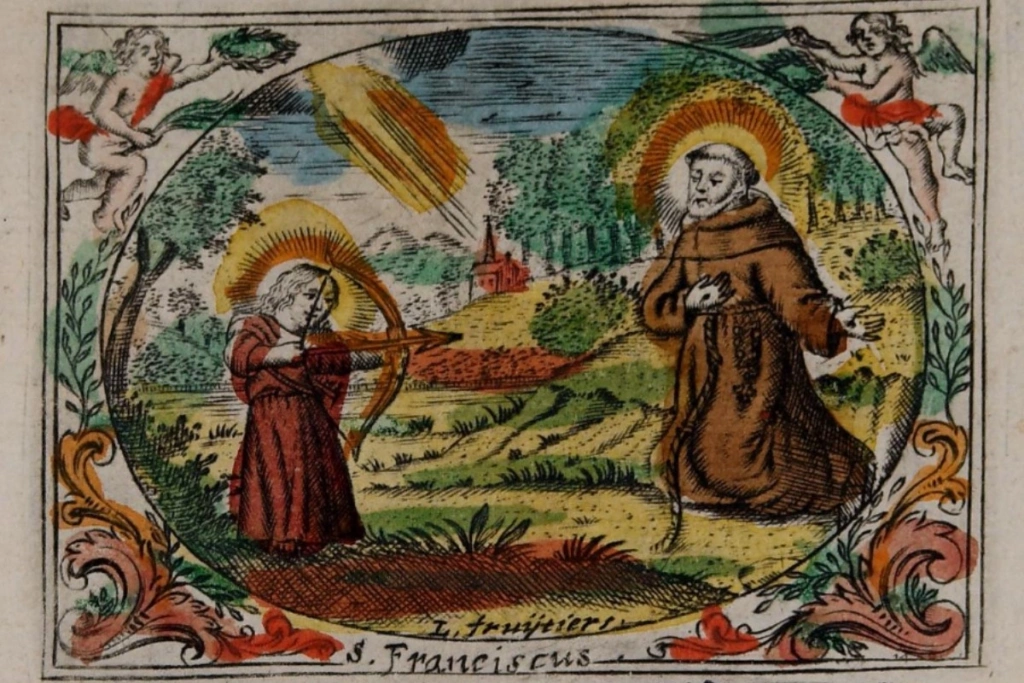
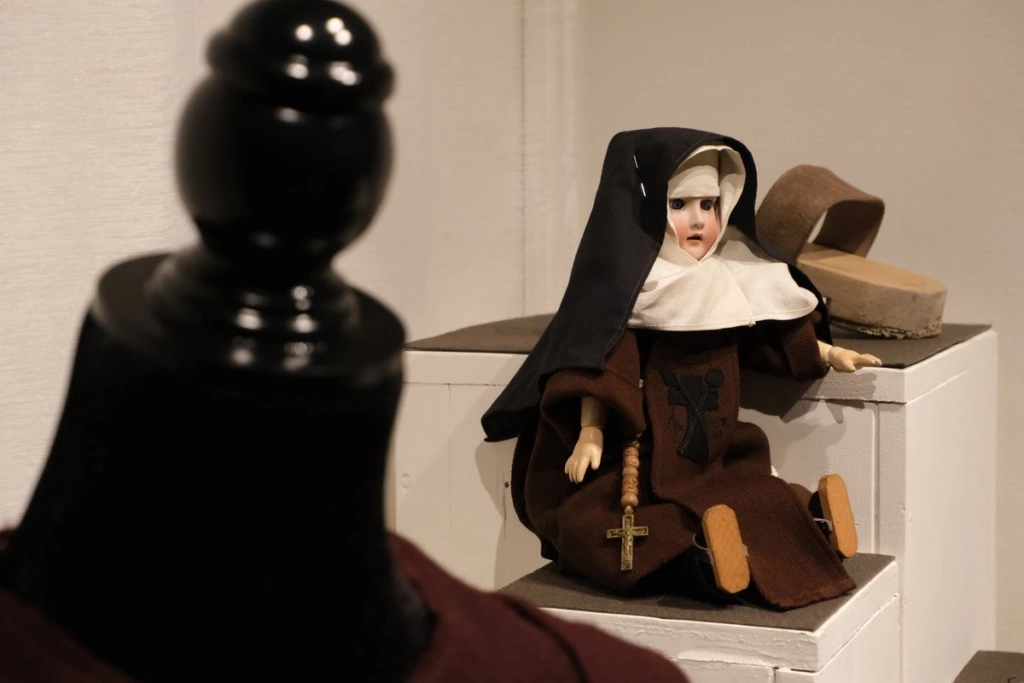
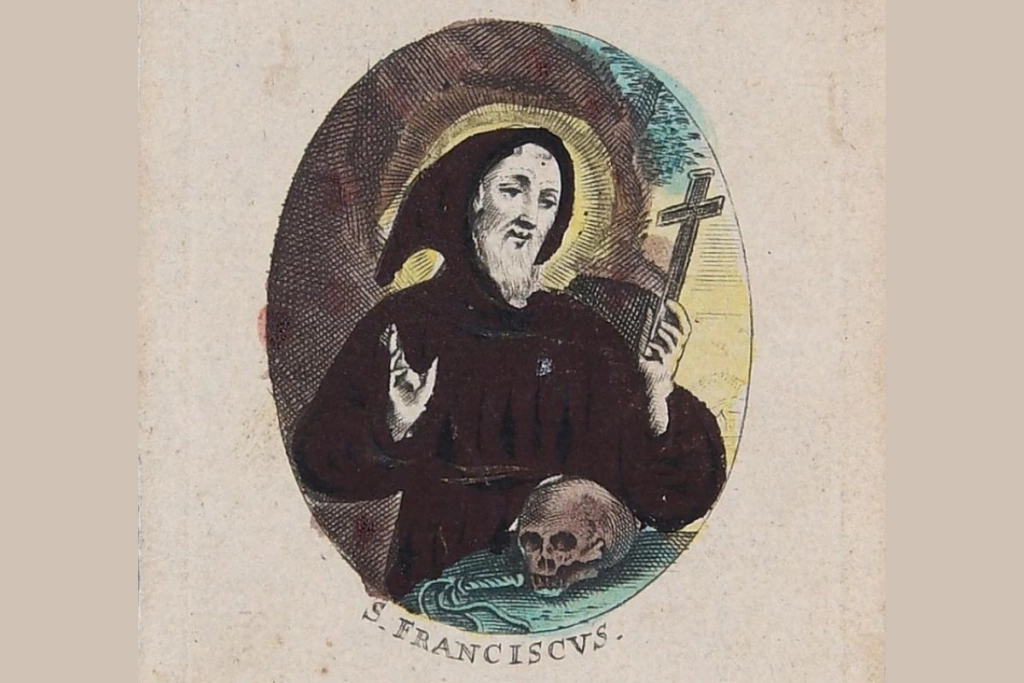
This series ties in with the exhibition Eight Centuries Less. From Francis’s youth in Assisi to the Jesuit concept of magis: explore the surprising traces of Francis of Assisi in the collection of the Ruusbroec Institute Library. Discover manuscripts, devotional prints and, for the first time, Sister Rumolda’s habit.
You can visit the exhibition free of charge until 29 January 2027 at the Ruusbroec Institute Library, Grote Kauwenberg 34, 2000 Antwerp.